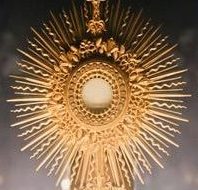
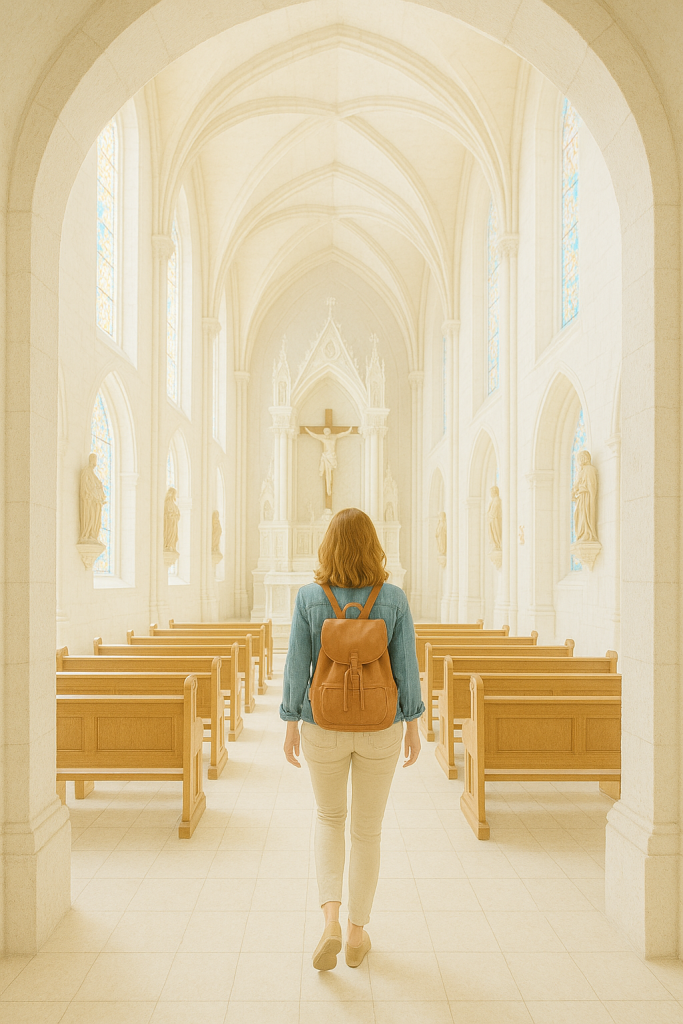
Sacred Heart Catholic Church, Conroe, Texas
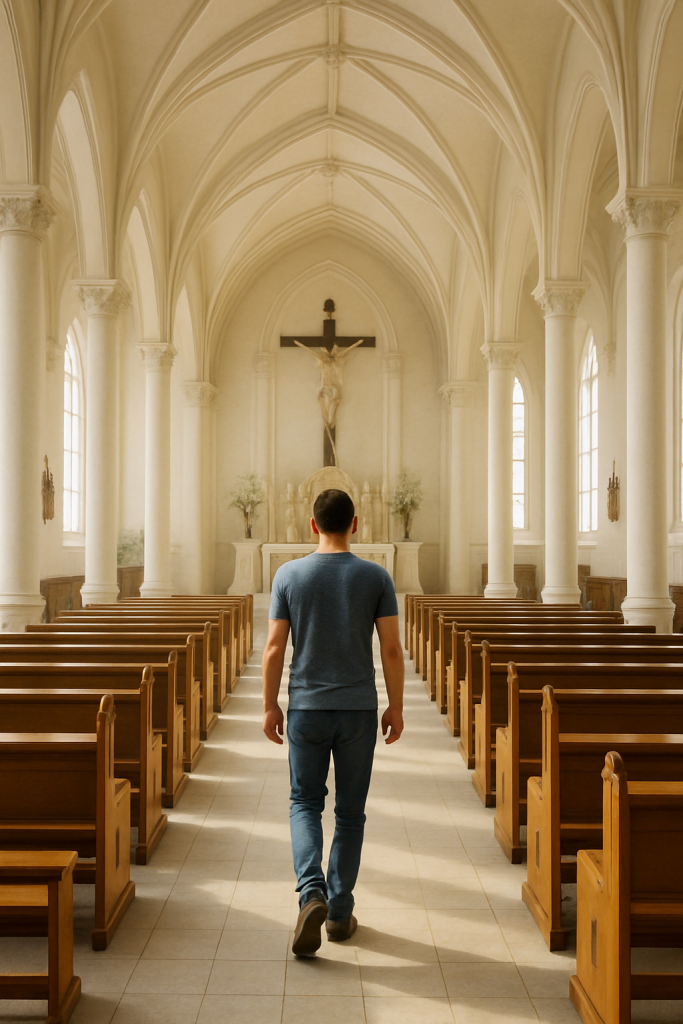
The Order of Christian Initiation of Adults (OCIA), formerly known as RCIA, is the process through which adults (and older children) formally enter and are initiated into the Catholic Church. It is a journey of conversion and education involving studies, prayer, and rituals, culminating in receiving the Sacraments of Initiation (Baptism, Confirmation, and Eucharist).
This page is a handbook for those coming into the church at Sacred Heart parish. Please bookmark this webpage so you can refer back as you progress through the program. The information in the following drop down panels will guide you through the steps of OCIA:
Step 1 – Identify your OCIA category and determine if you have any impediments to entering the Church.
In OCIA, catechumens are unbaptized individuals preparing to receive all three sacraments of initiation (Baptism, Confirmation, Eucharist) and candidates are already baptized Christians (in another tradition or Catholic) seeking full communion through Confirmation and Holy Communion. It is important for you to know your category because at our parish everyone attends OCIA class together and there are different rites and rituals for each group. Knowing your category will reduce confusion when we discuss shedules and events throughout the year.
Catechumens come into the Church at Easter vigil (the Saturday evening before Easter) every year. They spend at least a full year in the OCIA program and have more rituals and activities than candidates.
In our parish, candidates usually come into the Church at Pentecost (50 days after Easter) and at the Feast day of Christ the King (the week before the start of Advent in late November).
One of the requirements to become Catholic is to resolve any marital or living arrangements that do not conform to the Church’s teaching on marriage. These situations must be resolved before a person can receive the sacraments of initiation. Typically, these impediments involve previous divorces, a mixed marriage of a Catholic and non-Catholic, or unmarried people living together.
Please use this checklist to identify your situation:
These situations do not require marriage prep, and you have no impediments:
- Unmarried and not cohabitating
- Two married non-Catholics who are both in their first marriage.
- A Catholic and a non-Catholic who were married by a Priest or Deacon in a Catholic Church.
These situations require working with our marriage coordinator to resolve prior to receiving your sacraments:
- Unmarried and cohabitating.
- A Catholic and a non-Catholic who were not married in the Catholic Church.
- A Catholic and a non-Catholic who are married and either spouse was previously divorced.
- Two married non-Catholics who either or both were previously divorced.
If your situation is described in the second section above please make an appointment with our Marriage Preparation coordinator, Toni Castro (acastro@shconroe.org), using the following link- Make An Appointment – Toni will answer your questions and help begin your preparations.
“Annulment: The Process and its Meaning” by Rev. Patrick Lagges
Step 2 – Complete an interview with an OCIA team member and select a sponsor and a patron saint
Once you have completed ihe initial interview with a member ofour OCIA team you will be registered for OCIA classes. We will need a copy of your birth certificate and baptism certificate (if you are a candidate). You can bring a copy to class or email an image of the certificates and documents to anunez@shconroe.org. If you are unable to get a copy of your baptism certificate we can accept an affidavit of witness to your baptism filled out by someone who can attest to your baptism.
This article will be helpful in understanding the church’s teaching on patron saints. This Article is about selecting a confirmation sponsor.
Step 3 – Attend OCIA class
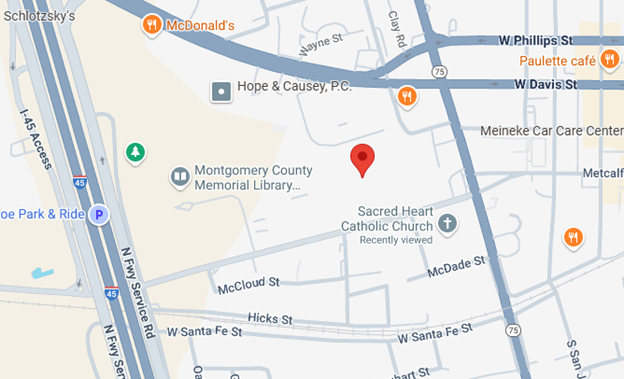
Our parish offers OCIA classes on Tuesdays from 6:30 – 8:00 at the Sacred Heart Church Parish Life Center at 704 Old Montgomery Rd. Conroe, TX 77301. The sessions run from early January to late May, and again from August to November. You are welcome to enter the classes at any time during the year.
2026-2027 OCIA Schedule

Map to the Parish Life Center where the OCIA classes are held
Sacred Heart Church Parish Life Center – 704 Old Montgomery Rd. Conroe, TX 77301
(936) 756-8186 parishoffice@shconroe.org

Step 4 – Supplement the OCIA class with additional study
Suggested study plan:
Begin listening to the All Roads Lead to Rome podcast by Dr. M.S. Bickford. Here you can learn about the teachings and practices of the Catholic Church.
Read the book To Whom Shall I Go? by Ellie Hiller. This is her conversion story and a good place to learn about the differences between Catholic and Non-Catholic Christian doctrine.
Learn about the Catholic Mass: This link takes you to a 10 session video series explaining the Catholic Mass. It will help you learn about how and why we celebrate the “source and summit” of our Christian faith. “A Biblical Walk Through the Mass” is a short book explaining the Mass.
Develop your prayer practice. The short book An Introduction to Prayer by Bishop Robert Barron is a good resource to help you learn how to pray.
Study sacred scripture. Two good study Bibles are: The Augustine Institute ESV Study Bible and The Ignatius Catholic Study Bible.
Sign up for the “Formed.org” website where you will find a wealth of free Catholic content including the Symbolon videos that we use in OCIA class. You can sign up as a member of our parish by following the instructions below. There are online courses about Catholicism, The Saints, daily reflections, scripture study, free audio books, resources and videos for kids, and much more. To sign up as a Sacred Heart Parishioner go to: https://signup.formed.org Then type in Sacred Heart Conroe, select our parish, and enter your contact information to establish your free account. Formed is also available as a smartphone app.
Websites:
Online handbook with information about the Mass, common Catholic prayers, and more
catholic.com – Answers to questions about Catholicism
United States Conference of Catholic Bishops Website.org – includes an online Catechism
newadvent.org – Writings of the Church Fathers and much more
YouTube Channels and Podcasts:
Bishop Robert Barron – (Be sure to watch or listen to Bishop’s Sunday homilies)
Father Mike Schmitz “The Catechism in a Year” – 365 podcasts that teach the beliefs of the Catholic Church
Father Mike Schmitz “The Bible in a Year” – 365 podcasts that teach about the Holy Scriptures
Books:
Ignatius Catholic Study Bible (2024)
“The Four Witnesses” by Rod Bennett (Introduction to the writings of the early church fathers)
“The Compendium of the Catechism of the Catholic Church”. This 200-page volume offers a quick synopsis of the essential contents of the faith as promulgated in the Catechism of the Catholic Church
Phone Apps:
Hallow – The number one app for Catholic Christian prayer and meditation. It includes Bible and Catechism in a year, an online OCIA class series in the form of 10-20 minute podcasts, and much more.
Ignatius Study Bible – online Bible
Laudate – Daily readings, order of the Mass, prayers
Magesterium – An AI driven search engine that you can use to answer questions about Catholicism. It is like ChatGPT but restricts its searches to Catholic sources.
Step 5 – Attend Mass
This is a link to a YouTube video where Father Mike describes the elements of the Mass
This link takes you to a video showing how to receive communion.
What to Expect When Attending Mass as a Non-Catholic
Our Parish Mass schedule can be found at the parish website – shconroe.org

Link to an online handbook with the order of the Mass that you can follow along with to help learn the Mass, common Catholic prayers, and other information
At Mass, Catholics do things and say things which are likely to seem rather alien. The Mass is based on 2,000 years of Christian theology and practice, and this itself rests on the even older foundation of Judaism.
Things at the Mass are sometimes initially hard to understand because it is so rich and it has so many layers of meaning. For example, consider incense… Incense is used at Mass for a host of reasons. It is symbolic of our prayers rising to God, but it also harkens back to the incense which was offered in the Jerusalem Temple in Ancient Israel.
If you keep coming back each week and start digging into the roots of the Mass, it’ll all start to make sense, and you’ll come to discover the profound richness which can be found there.
When you visit, you’ll soon notice that there’s a “script” for Mass. The priest and the people have prescribed parts. The priest will say something (e.g. “The Lord be with you!”) and then all the people will respond in unison (e.g. “And with your spirit”). These exchanges and prayers have been prayed by the Church for over 2,000 years and are worthy of a lifetime of meditation. Everything will probably be entirely in English, but there may be a few small parts sung in Latin or Greek.
Not only is there a “script”, there are “stage directions” too! God made us body and soul. Therefore, at Mass we don’t just think pious thoughts, we also worship with our bodies. This means that we stand to hear the words of Christ proclaimed, we sit to listen to the priest’s homily and we kneel in prayer at Communion.
A common concern in anticipation of many people’s first Mass is that they’re afraid they’ll “do something wrong” or stand out in some way. Don’t worry! All you have to do is copy those around you. I suggest finding a pew halfway down the church and then just sit when everyone else sits and stands when they stand.
The only point in the Mass where you’ll have to do anything is when the Priest or Deacon invites you to turn to the person next to you “and offer one another a sign of peace”. Typically, this just involves shaking your neighbor’s hand or offering a small wave or a nod and a smile. Often people say, “peace be with you” or just “peace”.
The Mass is divided into two parts: the Liturgy of the Word and the Liturgy of the Eucharist. The former part is devoted to prayer, the reading of Sacred Scripture and the priest’s homily, which is his reflection on the Bible passages which have just been read. The latter part of the Mass focuses on Holy Communion, or as it’s more commonly called, The Eucharist. If you’ve been to a Protestant service, the first part of the Mass will probably seem reasonably familiar, but the second half maybe less so.
Unless you understand the Catholic belief about the Eucharist, much of the Mass will seem incomprehensible…
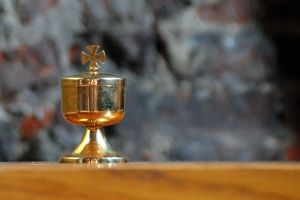
So, what is the Eucharist? Well, in the part of the Mass known as “The Offertory Procession”, bread and wine (mixed with water) are brought forward and placed on the altar. Catholics believe that, by the authority of Christ, when the priest calls down the Holy Spirit upon the bread and wine, while the appearance of bread and wine remain, they are transformed into Jesus’ Body and Blood. By consuming them, we are filled with the Divine Life.
Understanding the Eucharist illuminates so much of what might be confusing about the Mass. This is why Catholics take the Mass so seriously. This is why we fast from food beforehand. This is why we dress nicely. This is why Catholics kneel at Communion and why we bow towards the tabernacle behind the altar, the shiny box which contains the Eucharist.
Since Catholics believe that Jesus is truly present in the bread and wine, we take the receiving of Holy Communion very seriously. As a result, Communion is restricted to practicing Catholics.
You can participate in the Holy Mass as a non-Catholic:
- Make the sign of the cross with holy water when you enter the church. Making the sign of the cross with the holy water is a remembrance of your baptism.
- Genuflect or bow toward the altar as you enter the pew.
- Do everything at Mass, including kneeling, responding and singing except take communion/accept the Eucharist.
- Instead, you can remain in the pew, or go up in line with everyone else but simply cross your arms over your chest and the priest will give you a blessing instead of bread and wine (many people do this, including children too young to receive communion so you will be among many).
- Pray, including the Rosary and the Liturgy of the Hours.
- You can look up the Bible readings of the day online to follow along.
- Ther are also online postings of the order of the mass where you to read about the various parts of the Catholic Mass.
Catholicism can seem closed to outsiders because there is so much ritual involved, but the truth is that the Church is open and inviting to anyone who truly wants to participate.
“When you do not receive communion…you can make a spiritual communion, which is a most beneficial practice; by it the loveLove To put the needs of another before our own. To will the good of the other. of God will be greatly impressed on you” – St. Theresa of Avila
My Jesus, I believe that You are present in the Most Holy Sacrament. I love You above all things, and I desire to receive You into my soul. Since I cannot at this moment receive You sacramentally, come at least spiritually into my heart. I embrace You as if You were already there and unite myself wholly to You. Never permit me to be separated from You. Amen.
“When we feel the love of God growing cold, let us instantly make a Spiritual Communion. When we cannot go to the church, let us turn towards the tabernacle; no wall can shut us out from the good God.” – St. John Marie Vianney
Step 6 – Develop your prayer practice
Developing a Catholic prayer practice involves consistency over duration; start with 5–10 minutes daily, gradually increasing. Anchor prayer to routines (e.g., morning offering, before meals, or nightly examination of conscience). Utilize tools like a Hallow app, a journal, a Bible for Lectio Divina, and create a sacred, quiet space.
Sacramentals—blessed objects, actions, or prayers like holy water, crucifixes, and the Sign of the Cross—are used in prayer to focus attention, evoke God’s presence, and increase devotion. Consider buying a rosary, crucifix, and prayer cards and asking a priest to bless them after Mass. Bishop Robert Barron has a short book “An Introduction to Prayer” (buy here on Amazon).
Strategies for developing a prayer practice
- Start Small and Be Consistent: Focus on building the habit rather than the length of time. Praying for 20 minutes daily (divided into 10-minute segments) can help build a habit.
- Structure Your Prayer: Use the PALE method: Praise, Ask, Listen, and Examine.
- Incorporate Traditional Catholic Prayers: Utilize the Rosary, Morning Offering, and visits to the Blessed Sacrament.
- Be Flexible and Patient: If you miss a day, do not get discouraged; pick up again the next day.
- Use Resources: Consider using apps like Hallow or Laudate for guided meditations.
- Create a Sacred Space: Set up a dedicated area in your home with a crucifix, bible,
Daily Prayer Ideas:
Rosary: Pray a decade or the full Rosary.
Morning Offering: Offer your day, work, and struggles to God.
Exam of Conscience: Review your day and reflect on where you felt closest to God.
Lectio Divina: Read and reflect on Scripture. Consider buying a Catholic study Bible.
You can search for common Catholic prayers online.
Step 7 – Learn the foundational beliefs of the Catholic Church, The Creed, and common prayers
The Foundational Beliefs of the Catholic Church, The Creed, and Common Prayers
Father Nicolas asks us all to memorize the creed and some of the common prayers. Memorization is a good way to enhance your personal prayer practice.
The Nicene Creed
I believe in one God,
the Father almighty,
maker of heaven and earth,
of all things visible and invisible.
I believe in one Lord Jesus Christ,
the Only Begotten Son of God,
born of the Father before all ages.
God from God, Light from Light,
true God from true God,
begotten, not made, consubstantial with the Father;
through him all things were made.
For us men and for our salvation
he came down from heaven,
and by the Holy Spirit was incarnate of the Virgin Mary,
and became man.
For our sake he was crucified under Pontius Pilate,
he suffered death and was buried,
and rose again on the third day
in accordance with the Scriptures.
He ascended into heaven
and is seated at the right hand of the Father.
He will come again in glory
to judge the living and the dead
and his kingdom will have no end.
I believe in the Holy Spirit, the Lord, the giver of life,
who proceeds from the Father and the Son,
who with the Father and the Son is adored and glorified,
who has spoken through the prophets.
I believe in one, holy, catholic and apostolic Church.
I confess one Baptism for the forgiveness of sins
and I look forward to the resurrection of the dead
and the life of the world to come. Amen.
The “Our Father” Prayer
The Our Father (or Lord’s Prayer) is a foundational Christian prayer taught by Jesus to his disciples, appearing in Matthew 6:9–13 and Luke 11:2–4. It praises God, asks for daily sustenance, requests forgiveness, and seeks protection from evil. It is widely considered a summary of the entire Gospel.
“Our Father, who art in heaven,
hallowed be thy name;
thy kingdom come;
thy will be done on earth as it is in heaven.
Give us this day our daily bread;
and forgive us our trespasses as we forgive those who trespass against us;
and lead us not into temptation,
but deliver us from evil.
Amen.”
The Hail Mary Prayer
The Hail Mary is a central Catholic prayer honoring the Virgin Mary, rooted in Scripture (Luke 1) and invoking her intercession. It consists of two parts: a greeting based on the Annunciation and Visitation, and a petition asking for her prayers “now and at the hour of our death”.
“Hail, Mary, full of grace, the Lord is with thee. Blessed art thou among women, and blessed is the fruit of thy womb, Jesus. Holy Mary, Mother of God, pray for us sinners, now and at the hour of our death. Amen.”
The Glory Be prayer
(or Gloria Patri) is a foundational Christian doxology, or prayer of praise, honoring the Holy Trinity: Father, Son, and Holy Spirit. It is frequently recited in the Rosary and other devotions to give glory to God, emphasizing His eternal nature.
“Glory be to the Father, and to the Son, and to the Holy Spirit,
As it was in the beginning, is now, and ever shall be,
World without end.
Amen.”
Father Nicolas wants all members of the parish, and those who are coming into the church, to learn the essential doctrines of the faith, which are summarized in the Nicene or Apostlesapostles In Christian theology, the apostles were Jesus’ closest followers and primary disciples, and were responsible for spreading his teachings.’ Creed. Beyond the intellectual assent to these beliefs, the Church mandates five “precepts” that constitute the minimum required practices for a faithful Catholic.
A Catholic must believe in:
- The Trinity: One God in three persons (Father, Son, and Holy Spirit).
- The Incarnation: Jesus Christ is the Son of God who took on human nature, died, and rose again.
- The Church: The authority of the Roman Catholic Church, as founded by Christ.
- The Sacraments: Belief in the seven sacraments, specifically the Real Presence of Christ in the Eucharist.
- Repentance and Forgiveness: The need for confession of sins.
The Five Precepts of the Church (Minimum Actions)
These are the obligatory, “bare minimum” actions required to remain a practicing Catholic:
- Sunday Mass: Attend Mass on Sundays and Holy Days of Obligation, and rest from servile labor.
- Confession: Confess serious sins at least once a year (Sacrament of Reconciliation).
- Eucharist: Receive Holy Communion at least once a year, during the Easter season.
- Fasting/Abstinence: Observe the days of fasting and abstinence (e.g., Ash Wednesday and Good Friday).
- Support the Church: Provide for the material needs of the Church according to one’s ability.
The Seven Gifts of the Holy Spirit
In Catholic teaching, the seven Gifts of the Holy Spirit—wisdom, understanding, counsel, fortitude, knowledge, piety, and fear of the Lord—are permanent dispositions that make individuals docile to the Holy Spirit’s promptings. Rooted in Isaiah 11:1-3, these gifts perfect the virtues of those who receive them, helping them to live a holy life and follow divine inspiration.
- Wisdom: Enables a person to see, evaluate, and order all things according to God’s perspective and divine plan.
- Understanding: Provides a deeper, intuitive insight into the truths of faith and the mysteries of God.
- Counsel (Right Judgment): Helps to discern between right and wrong, allowing individuals to make sound moral decisions in accordance with God’s will.
- Fortitude (Courage): Gives supernatural strength and courage to persevere in faith, overcome fear, and endure trials.
- Knowledge: Enables a person to perceive the true value of created things in relation to God.
- Piety (Reverence): Deepens the filial love and respect for God as a loving Father, inspiring true worship and affection.
- Fear of the Lord (Wonder and Awe): Creates a profound respect for God’s majesty and a desire to avoid offending Him out of love, not servile fear.
Key Aspects of the Gifts
- Purpose: The gifts are designed to make the faithful receptive to the promptings of the Holy Spirit, enabling them to live a full Christian life.
- Relationship to Virtues: According to St. Thomas Aquinas, these gifts perfect the theological and moral virtues.
- Origin: They are based on the prophecy in Isaiah 11 regarding the qualities that would rest upon the Messiah.
These gifts are considered distinct from the charisms (special graces for service) and the fruits of the Holy Spirit (virtues resulting from the Holy Spirit’s action).
The Seven Sacraments
Sacraments of Initiation: These sacraments lay the foundations of Christian life.
- Baptism: Cleanses from sin and initiates one into the Church.
- Confirmation: Seals the baptized with the gift of the Holy Spirit, strengthening them.
- Eucharist: The source and summit of Christian life, representing the body and blood of Christ.
Sacraments of Healing: These sacraments continue Jesus’ work of healing and salvation.
- Penance and Reconciliation: Confession of sins to a priest for absolution.
- Anointing of the Sick: Offers spiritual and physical strength to those struggling with illness.
Sacraments at the Service of Communion
These sacraments are directed toward the salvation of others.
- Holy Orders: The ordination of bishops, priests, and deacons.
- Matrimony (Marriage): The covenantal union between a man and a woman.
Core Moral Obligations
Catholics are also required to follow the Ten Commandments and the moral teachings of the Church, which include the prohibition of mortal sins.
Note: While these are the minimums, the Church encourages a life of active faith that goes beyond these requirements.
The Ten Commandments
Do Not Covet: Do not covet your neighbor’s goods or wife.
I am the Lord your God: You shall have no other gods before me.
No Idols: Do not make or worship idols.
Reverence God’s Name: Do not take the name of the Lord in vain.
Keep the Sabbath Holy: Remember the Sabbath day.
Honor Parents: Honor your father and mother.
Do Not Murder: You shall not kill.
No Adultery: Do not commit adultery.
Do Not Steal: You shall not steal.
No False Witness: Do not bear false witness against your neighbor.
Catholic Answers Article “What Do Catholics Believe”
What Do Catholics Believe?
Whether or not you are Catholic, you may have questions about the Catholic faith. You may have heard challenges to the Catholic Church’s claim to be the interpreter and safeguard of the teachings of Jesus Christ.
Such challenges come from door-to-door missionaries who ask, “Are you saved?”, from peer pressure that urges you to ignore the Church’s teachings, from a secular culture that whispers “There is no God”
You can’t deal with these challenges unless you understand the basics of the Catholic faith. This tract introduces them to you.
In Catholicism you will find answers to life’s most troubling questions: Why am I here? Who made me? What must I believe? How must I act? All these can be answered to your satisfaction, if only you will open yourself to God’s grace, turn to the Church he established, and follow his plan for you (John 7:17).
AN UNBROKEN HISTORY
Jesus said his Church would be “the light of the world.” He then noted that “a city set on a hill cannot be hid” (Matt. 5:14). This means his Church is a visible organization. It must have characteristics that clearly identify it and that distinguish it from other churches. Jesus promised, “I will build my Church and the gates of hell will not prevail against it” (Matt. 16:18). This means that his Church will never be destroyed and will never fall away from him. His Church will survive until his return.
Among the Christian churches, only the Catholic Church has existed since the time of Jesus. Every other Christian church is an offshoot of the Catholic Church. The Eastern Orthodox churches broke away from unity with the pope in 1054. The Protestant churches were established during the Reformation, which began in 1517. (Most of today’s Protestant churches are actually offshoots of the original Protestant offshoots.)
Only the Catholic Church existed in the tenth century, in the fifth century, and in the first century, faithfully teaching the doctrines given by Christ to the apostles, omitting nothing. The line of popes can be traced back, in unbroken succession, to Peter himself. This is unequaled by any institution in history.
Even the oldest government is new compared to the papacy, and the churches that send out door-to-door missionaries are young compared to the Catholic Church. Many of these churches began as recently as the nineteenth or twentieth centuries. Some even began during your own lifetime. None of them can claim to be the Church Jesus established.
The Catholic Church has existed for nearly 2,000 years, despite constant opposition from the world. This is testimony to the Church’s divine origin. It must be more than a merely human organization, especially considering that its human members— even some of its leaders—have been unwise, corrupt, or prone to heresy.
Any merely human organization with such members would have collapsed early on. The Catholic Church is today the most vigorous church in the world (and the largest, with a billion members: one sixth of the human race), and that is testimony not to the cleverness of the Church’s leaders, but to the protection of the Holy Spirit.
FOUR MARKS OF THE TRUE CHURCH
If we wish to locate the Church founded by Jesus, we need to locate the one that has the four chief marks or qualities of his Church. The Church we seek must be one, holy, catholic, and apostolic.
The Church Is One (Rom. 12:5, 1 Cor. 10:17, 12:13, CCC 813–822)
Jesus established only one Church, not a collection of differing churches (Lutheran, Baptist, Anglican, and so on). The Bible says the Church is the bride of Christ (Eph. 5:23–32). Jesus can have but one spouse, and his spouse is the Catholic Church.
His Church also teaches just one set of doctrines, which must be the same as those taught by the apostles (Jude 3). This is the unity of belief to which Scripture calls us (Phil. 1:27, 2:2).
Although some Catholics dissent from officially-taught doctrines, the Church’s official teachers—the pope and the bishops united with him—have never changed any doctrine. Over the centuries, as doctrines are examined more fully, the Church comes to understand them more deeply (John 16:12–13), but it never understands them to mean the opposite of what they once meant.
The Church Is Holy (Eph. 5:25–27, Rev. 19:7–8, CCC 823–829)
By his grace Jesus makes the Church holy, just as he is holy. This doesn’t mean that each member is always holy. Jesus said there would be both good and bad members in the Church (John 6:70), and not all the members would go to heaven (Matt. 7:21–23).
But the Church itself is holy because it is the source of holiness and is the guardian of the special means of grace Jesus established, the sacraments (cf. Eph. 5:26).
The Church Is Catholic (Matt. 28:19–20, Rev. 5:9–10, CCC 830–856)
Jesus’ Church is called catholic (“universal” in Greek) because it is his gift to all people. He told his apostles to go throughout the world and make disciples of “all nations” (Matt. 28:19–20).
For 2,000 years the Catholic Church has carried out this mission, preaching the good news that Christ died for all men and that he wants all of us to be members of his universal family (Gal. 3:28).
Nowadays the Catholic Church is found in every country of the world and is still sending out missionaries to “make disciples of all nations” (Matt. 28:19).
The Church Jesus established was known by its most common title, “the Catholic Church,” at least as early as the year 107, when Ignatius of Antioch used that title to describe the one Church Jesus founded. The title apparently was old in Ignatius’s time, which means it probably went all the way back to the time of the apostles.
The Church Is Apostolic (Eph. 2:19–20, CCC 857–865)
The Church Jesus founded is apostolic because he appointed the apostles to be the first leaders of the Church, and their successors were to be its future leaders. The apostles were the first bishops, and, since the first century, there has been an unbroken line of Catholic bishops faithfully handing on what the apostles taught the first Christians in Scripture and oral Tradition (2 Tim. 2:2).
These beliefs include the bodily Resurrection of Jesus, the Real Presence of Jesus in the Eucharist, the sacrificial nature of the Mass, the forgiveness of sins through a priest, baptismal regeneration, the existence of purgatory, Mary’s special role, and much more —even the doctrine of apostolic succession itself.
Early Christian writings prove the first Christians were thoroughly Catholic in belief and practice and looked to the successors of the apostles as their leaders. What these first Christians believed is still believed by the Catholic Church. No other Church can make that claim.
Pillar of Fire, Pillar of Truth
Man’s ingenuity cannot account for this. The Church has remained one, holy, catholic, and apostolic—not through man’s effort, but because God preserves the Church he established (Matt. 16:18, 28:20).
He guided the Israelites on their escape from Egypt by giving them a pillar of fire to light their way across the dark wilderness (Exod. 13:21). Today he guides us through his Catholic Church.
The Bible, sacred Tradition, and the writings of the earliest Christians testify that the Church teaches with Jesus’ authority. In this age of countless competing religions, each clamoring for attention, one voice rises above the din: the Catholic Church, which the Bible calls “the pillar and foundation of truth” (1 Tim. 3:15).
Jesus assured the apostles and their successors, the popes and the bishops, “He who listens to you listens to me, and he who rejects you rejects me” (Luke 10:16). Jesus promised to guide his Church into all truth (John 16:12–13). We can have confidence that his Church teaches only the truth.
THE STRUCTURE OF THE CHURCH
Jesus chose the apostles to be the earthly leaders of the Church. He gave them his own authority to teach and to govern—not as dictators, but as loving pastors and fathers. That is why Catholics call their spiritual leaders “father.” In doing so we follow Paul’s example: “I became your father in Jesus Christ through the gospel” (1 Cor. 4:15).
The apostles, fulfilling Jesus’ will, ordained bishops, priests, and deacons and thus handed on their apostolic ministry to them—the fullest degree of ordination to the bishops, lesser degrees to the priests and deacons.
The Pope and Bishops (CCC 880–883)
Jesus gave Peter special authority among the apostles (John 21:15–17) and signified this by changing his name from Simon to Peter, which means “rock” (John 1:42). He said Peter was to be the rock on which he would build his Church (Matt. 16:18).
In Aramaic, the language Jesus spoke, Simon’s new name was Kepha (which means a massive rock). Later this name was translated into Greek as Petros (John 1:42) and into English as Peter. Christ gave Peter alone the “keys of the kingdom” (Matt. 16:19) and promised that Peter’s decisions would be binding in heaven. He also gave similar power to the other apostles (Matt. 18:18), but only Peter was given the keys, symbols of his authority to rule the Church on earth in Jesus’ absence.
Christ, the Good Shepherd, called Peter to be the chief shepherd of his Church (John 21:15–17). He gave Peter the task of strengthening the other apostles in their faith, ensuring that they taught only what was true (Luke 22:31–32). Peter led the Church in proclaiming the gospel and making decisions (Acts 2:1– 41, 15:7–12).
Early Christian writings tell us that Peter’s successors, the bishops of Rome (who from the earliest times have been called by the affectionate title of “pope,” which means “papa”), continued to exercise Peter’s ministry in the Church.
The pope is the successor to Peter as bishop of Rome. The world’s other bishops are successors to the apostles in general.
HOW GOD SPEAKS TO US
As from the first, God speaks to his Church through the Bible and through sacred Tradition. To make sure we understand him, he guides the Church’s teaching authority—the magisterium—so it always interprets the Bible and Tradition accurately. This is the gift of infallibility.
Like the three legs on a stool, the Bible, Tradition, and the magisterium are all necessary for the stability of the Church and to guarantee sound doctrine.
Sacred Tradition (CCC 75–83)
Sacred Tradition should not be confused with mere traditions of men, which are more commonly called customs or disciplines. Jesus sometimes condemned customs or disciplines, but only if they were contrary to God’s commands (Mark 7:8). He never condemned sacred Tradition, and he didn’t even condemn all human tradition.
Sacred Tradition and the Bible are not different or competing revelations. They are two ways that the Church hands on the gospel. Apostolic teachings such as the Trinity, infant baptism, the inerrancy of the Bible, purgatory, and Mary’s perpetual virginity have been most clearly taught through Tradition, although they are also implicitly present in (and not contrary to) the Bible. The Bible itself tells us to hold fast to Tradition, whether it comes to us in written or oral form (2 Thess. 2:15, 1 Cor. 11:2).
Sacred Tradition should not be confused with customs and disciplines, such as the rosary, priestly celibacy, and not eating meat on Fridays in Lent. These are good and helpful things, but they are not doctrines. Sacred Tradition preserves doctrines first taught by Jesus to the apostles and later passed down to us through the apostles’ successors, the bishops.
Scripture (CCC 101–141)
Scripture, by which we mean the Old and New Testaments, was inspired by God (2 Tim. 3:16). The Holy Spirit guided the biblical authors to write what he wanted them to write. Since God is the principal author of the Bible, and since God is truth itself (John 14:6) and cannot teach anything untrue, the Bible is free from all error in everything it asserts to be true.
Some Christians claim, “The Bible is all I need,” but this notion is not taught in the Bible itself. In fact, the Bible teaches the contrary idea (2 Pet. 1:20–21, 3:15–16). The “Bible alone” theory was not believed by anyone in the early Church.
It is new, having arisen only in the 1500s during the Protestant Reformation. The theory is a “tradition of men” that nullifies the Word of God, distorts the true role of the Bible, and undermines the authority of the Church Jesus established (Mark 7:1–8).
Although popular with many “Bible Christian” churches, the “Bible alone” theory simply does not work in practice. Historical experience disproves it. Each year we see additional splintering among “Bible-believing” religions.
Today there are tens of thousands of competing denominations, each insisting its interpretation of the Bible is the correct one. The resulting divisions have caused untold confusion among millions of sincere but misled Christians.
Just open up the Yellow Pages of your telephone book and see how many different denominations are listed, each claiming to go by the “Bible alone,” but no two of them agreeing on exactly what the Bible means.
We know this for sure: The Holy Spirit cannot be the author of this confusion (1 Cor. 14:33). God cannot lead people to contradictory beliefs because his truth is one. The conclusion? The “Bible alone” theory must be false.
The Magisterium (CCC 85–87, 888–892)
Together the pope and the bishops form the teaching authority of the Church, which is called the magisterium (from the Latin for “teacher”). The magisterium, guided and protected from error by the Holy Spirit, gives us certainty in matters of doctrine. The Church is the custodian of the Bible and faithfully and accurately proclaims its message, a task which God has empowered it to do.
Keep in mind that the Church came before the New Testament, not the New Testament before the Church. Divinely-inspired members of the Church wrote the books of the New Testament, just as divinely-inspired writers had written the Old Testament, and the Church is guided by the Holy Spirit to guard and interpret the entire Bible, both Old and New Testaments.
Such an official interpreter is absolutely necessary if we are to understand the Bible properly. (We all know what the Constitution says, but we still need a Supreme Court to interpret what it means.)
The magisterium is infallible when it teaches officially because Jesus promised to send the Holy Spirit to guide the apostles and their successors “into all truth” (John 16:12–13).
HOW GOD DISTRIBUTES HIS GIFTS
Jesus promised he would not leave us orphans (John 14:18) but would send the Holy Spirit to guide and protect us (John 15:26). He gave the sacraments to heal, feed, and strengthen us. The seven sacraments —baptism, the Eucharist, penance (also called reconciliation or confession), confirmation, holy orders, matrimony, and the anointing of the sick—are not just symbols. They are signs that actually convey God’s grace and love.
The sacraments were foreshadowed in the Old Testament by things that did not actually convey grace but merely symbolized it (circumcision, for example, prefigured baptism, and the Passover meal prefigured the Eucharist. When Christ came, he did not do away with symbols of God’s grace. He supernaturalized them, energizing them with grace. He made them more than symbols.
God constantly uses material things to show his love and power. After all, matter is not evil. When he created the physical universe, everything God created was “very good” (Gen. 1:31). He takes such delight in matter that he even dignified it through his own Incarnation (John 1:14).
During his earthly ministry Jesus healed, fed, and strengthened people through humble elements such as mud, water, bread, oil, and wine. He could have performed his miracles directly, but he preferred to use material things to bestow his grace.
In his first public miracle Jesus turned water into wine, at the request of his mother, Mary (John 2:1–11). He healed a blind man by rubbing mud on his eyes (John 9:1–7). He multiplied a few loaves and fish into a meal for thousands (John 6:5–13). He changed bread and wine into his own body and blood (Matt. 26:26– 28). Through the sacraments he continues to heal, feed, and strengthen us.
Baptism (CCC 1213–1284)
Because of original sin, we are born without grace in our souls, so there is no way for us to have fellowship with God. Jesus became man to bring us into union with his Father. He said no one can enter the kingdom of God unless he is first born of “water and the Spirit” (John 3:5)—this refers to baptism.
Through baptism we are born again, but this time on a spiritual level instead of a physical level. We are washed in the bath of rebirth (Titus 3:5). We are baptized into Christ’s death and therefore share in his Resurrection (Rom. 6:3–7).
Baptism cleanses us of sins and brings the Holy Spirit and his grace into our souls (Acts 2:38, 22:16). And the apostle Peter is perhaps the most blunt of all: “Baptism now saves you” (1 Pet. 3:21). Baptism is the gateway into the Church.
Penance (CCC 1422–1498)
Sometimes on our journey toward the heavenly promised land we stumble and fall into sin. God is always ready to lift us up and to restore us to grace-filled fellowship with him. He does this through the sacrament of penance (which is also known as confession or reconciliation).
Jesus gave his apostles power and authority to reconcile us to the Father. They received Jesus’ own power to forgive sins when he breathed on them and said, “Receive the Holy Spirit. Whose sins you forgive are forgiven them, and whose sins you retain are retained” (John 20:22–23).
Paul notes that “all this is from God, who has reconciled us to himself through Christ and given us the ministry of reconciliation. . . . So, we are ambassadors for Christ, as if God were appealing through us” (2 Cor. 5:18–20). Through confession to a priest, God’s minister, we have our sins forgiven, and we receive grace to help us resist future temptations.
The Eucharist (CCC 1322–1419)
Once we become members of Christ’s family, he does not let us go hungry, but feeds us with his own body and blood through the Eucharist. In the Old Testament, as they prepared for their journey in the wilderness, God commanded his people to sacrifice a lamb and sprinkle its blood on their doorposts, so the Angel of Death would pass by their homes. Then they ate the lamb to seal their covenant with God.
This lamb prefigured Jesus. He is the real “Lamb of God,” who takes away the sins of the world (John 1:29). Through Jesus we enter into a New Covenant with God (Luke 22:20), who protects us from eternal death. God’s Old Testament people ate the Passover lamb. Now we must eat the Lamb that is the Eucharist. Jesus said, “Unless you eat my flesh and drink my blood you have no life within you” (John 6:53).
At the Last Supper he took bread and wine and said, “Take and eat. This is my body . . . This is my blood which will be shed for you” (Mark 14:22–24). In this way Jesus instituted the sacrament of the Eucharist, the sacrificial meal Catholics consume at each Mass.
The Catholic Church teaches that the sacrifice of Christ on the cross occurred “once for all”; it cannot be repeated (Heb. 9:28). Christ does not “die again” during Mass, but the very same sacrifice that occurred on Calvary is made present on the altar. That’s why the Mass is not “another” sacrifice, but a participation in the same, once-for-all sacrifice of Christ on the cross.
Paul reminds us that the bread and the wine really become, by a miracle of God’s grace, the actual body and blood of Jesus: “Anyone who eats and drinks without recognizing the body of the Lord eats and drinks judgment on himself” (1 Cor. 11:27–29).
After the consecration of the bread and wine, no bread or wine remains on the altar. Only Jesus himself, under the appearance of bread and wine, remains.
Confirmation (CCC 1285–1321)
God strengthens our souls in another way, through the sacrament of confirmation. Even though Jesus’ disciples received grace before his Resurrection, on Pentecost the Holy Spirit came to strengthen them with new graces for the difficult work ahead.
They went out and preached the gospel fearlessly and carried out the mission Christ had given them. Later, they laid hands on others to strengthen them as well (Acts 8:14–17). Through confirmation you too are strengthened to meet the spiritual challenges in your life.
Matrimony (CCC 1601–1666)
Most people are called to the married life. Through the sacrament of matrimony God gives special graces to help married couples with life’s difficulties, especially to help them raise their children as loving followers of Christ.
Marriage involves three parties: the bride, the groom, and God. When two Christians receive the sacrament of matrimony, God is with them, witnessing and blessing their marriage covenant. A sacramental marriage is permanent; only death can break it (Mark 10:1–12, Rom. 7:2–3, 1 Cor. 7:10–11). This holy union is a living symbol of the unbreakable relationship between Christ and his Church (Eph. 5:21–33).
Holy Orders (CCC 1536–1600)
Others are called to share specially in Christ’s priesthood. In the Old Covenant, even though Israel was a kingdom of priests (Exod. 19:6), the Lord called certain men to a special priestly ministry (Exod. 19: 22). In the New Covenant, even though Christians are a kingdom of priests (1 Pet. 2:9), Jesus calls certain men to a special priestly ministry (Rom. 15:15–16).
This sacrament is called holy orders. Through it priests are ordained and thus empowered to serve the Church (2 Tim. 1:6–7) as pastors, teachers, and spiritual fathers who heal, feed, and strengthen God’s people—most importantly through preaching and the administration of the sacraments.
Anointing of the Sick (CCC 1499–1532)
Priests care for us when we are physically ill. They do this through the sacrament known as the anointing of the sick. The Bible instructs us, “Is anyone among you suffering? He should pray. . . . Is any one among you sick? He should summon the presbyters [priests] of the Church, and they should pray over him and anoint him with oil in the name of the Lord, and the prayer of faith will save the sick person, and the Lord will raise him up. If he has committed any sins, he will be forgiven” (Jas. 5:14–15). Anointing of the sick not only helps us endure illness, but it cleanses our souls and helps us prepare to meet God.
TALKING WITH GOD AND HIS SAINTS
One of the most important activities for a Catholic is prayer. Without it there can be no true spiritual life. Through personal prayer and the communal prayer of the Church, especially the Mass, we worship and praise God, we express sorrow for our sins, and we intercede on behalf of others (1 Tim. 2:1–4). Through prayer we grow in our relationship with Christ and with members of God’s family (CCC 2663–2696).
This family includes all members of the Church, whether on earth, in heaven, or in purgatory. Since Jesus has only one body, and since death has no power to separate us from Christ (Rom. 8:3–8), Christians who are in heaven or who, before entering heaven, are being purified in purgatory by God’s love (1 Cor. 3:12–15) are still part of the Body of Christ (CCC 962).
Jesus said the second greatest commandment is to “love your neighbor as yourself” (Matt. 22:39). Those in heaven love us more intensely than they ever could have loved us while on earth. They pray for us constantly (Rev. 5:8), and their prayers are powerful (Jas. 5:16, CCC 956, 2683, 2692).
Our prayers to the saints in heaven, asking for their prayers for us, and their intercession with the Father do not undermine Christ’s role as sole Mediator (1 Tim. 2:5). In asking saints in heaven to pray for us we follow Paul’s instructions: “I urge that supplications, prayers, intercessions, and thanksgivings be made for everyone,” for “this is good and pleasing to God our Savior” (1 Tim. 2:1–4).
All members of the Body of Christ are called to help one another through prayer (CCC 2647). Mary’s prayers are especially effective on our behalf because of her relationship with her Son (John 2:1–11).
God gave Mary a special role (CCC 490–511, 963– 975). He saved her from all sin (Luke 1:28, 47), made her uniquely blessed among all women (Luke 1:42), and made her a model for all Christians (Luke 1:48). At the end of her life he took her, body and soul, into heaven—an image of our own resurrection at the end of the world (Rev. 12:1–2).
WHAT IS THE PURPOSE OF LIFE?
Old catechisms asked, “Why did God make you?” The answer: “God made me to know him, to love him, and to serve him in this world and to be happy with him forever in the next.” Here, in just 26 words, is the whole reason for our existence. Jesus answered the question even more briefly: “I came so that [you] might have life and have it more abundantly” (John 10:10).
God’s plan for you is simple. Your loving Father wants to give you all good things—especially eternal life. Jesus died on the cross to save us all from sin and the eternal separation from God that sin causes (CCC 599–623). When he saves us, he makes us part of his Body, which is the Church (1 Cor. 12:27–30). We thus become united with him and with Christians everywhere (on earth, in heaven, in purgatory).
What You Must Do to Be Saved
Best of all, the promise of eternal life is a gift, freely offered to us by God (CCC 1727). Our initial forgiveness and justification are not things we “earn” (CCC 2010). Jesus is the mediator who bridged the gap of sin that separates us from God (1 Tim. 2:5); he bridged it by dying for us. He has chosen to make us partners in the plan of salvation (1 Cor. 3:9).
The Catholic Church teaches what the apostles taught and what the Bible teaches: We are saved by grace alone, but not by faith alone (which is what “Bible Christians” teach; see Jas. 2:24).
When we come to God and are justified (that is, enter a right relationship with God), nothing preceding justification, whether faith or good works, earns grace. But then God plants his love in our hearts, and we should live out our faith by doing acts of love (Gal. 6:2).
Even though only God’s grace enables us to love others, these acts of love please him, and he promises to reward them with eternal life (Rom. 2:6–7, Gal. 6:6–10). Thus good works are meritorious. When we first come to God in faith, we have nothing in our hands to offer him. Then he gives us grace to obey his commandments in love, and he rewards us with salvation when we offer these acts of love back to him (Rom. 2:6–11, Gal. 6:6–10, Matt. 25:34–40).
Jesus said it is not enough to have faith in him; we also must obey his commandments. “Why do you call me ‘Lord, Lord,’ but do not do the things I command?” (Luke 6:46, Matt. 7:21–23, 19:16–21).
We do not “earn” our salvation through good works (Eph. 2:8–9, Rom. 9:16), but our faith in Christ puts us in a special grace-filled relationship with God so that our obedience and love, combined with our faith, will be rewarded with eternal life (Rom. 2:7, Gal. 6:8–9).
Paul said, “God is the one who, for his good purpose, works in you both to desire and to work” (Phil. 2:13). John explained that “the way we may be sure that we know him is to keep his commandments. Whoever says, ‘I know him,’ but does not keep his commandments is a liar, and the truth is not in him” (1 John 2:3–4, 3:19–24, 5:3–4).
Since no gift can be forced on the recipient—gifts always can be rejected—even after we become justified, we can throw away the gift of salvation. We throw it away through grave (mortal) sin (1 John 5:16, Rom. 11:22–23, 1 Cor. 15:1–2; CCC 1854–1863). Paul tells us, “The wages of sin is death” (Rom. 6:23).
Read his letters and see how often Paul warned Christians against sin! He would not have felt compelled to do so if their sins could not exclude them from heaven (see, for example, 1 Cor. 6:9–10, Gal. 5:19–21).
Paul reminded the Christians in Rome that God “will repay everyone according to his works: eternal life for those who seek glory, honor, and immortality through perseverance in good works, but wrath and fury to those who selfishly disobey the truth and obey wickedness” (Rom. 2:6–8).
Sins are nothing but evil works (CCC 1849–1850). We can avoid sins by habitually performing good works. Every saint has known that the best way to keep free from sins is to embrace regular prayer, the sacraments (the Eucharist first of all), and charitable acts.
Are You Guaranteed Heaven?
Some people promote an especially attractive idea: All true Christians, regardless of how they live, have an absolute assurance of salvation, once they accept Jesus into their hearts as “their personal Lord and Savior.” The problem is that this belief is contrary to the Bible and constant Christian teaching.
Keep in mind what Paul told the Christians of his day: “If we have died with him [in baptism; see Rom. 6:3–4] we shall also live with him; if we persevere we shall also reign with him” (2 Tim. 2:11–12).
If we do not persevere, we shall not reign with him. In other words, Christians can forfeit heaven (CCC 1861).
The Bible makes it clear that Christians have a moral assurance of salvation (God will be true to his word and will grant salvation to those who have faith in Christ and are obedient to him [1 John 3:19–24]), but the Bible does not teach that Christians have a guarantee of heaven. There can be no absolute assurance of salvation. Writing to Christians, Paul said, “See, then, the kindness and severity of God: severity toward those who fell, but God’s kindness to you, provided you remain in his kindness, otherwise you too will be cut off” (Rom. 11:22–23; Matt. 18:21–35, 1 Cor. 15:1–2, 2 Pet. 2:20–21).
Note that Paul includes an important condition: “provided you remain in his kindness.” He is saying that Christians can lose their salvation by throwing it away. He warns, “Whoever thinks he is standing secure should take care not to fall” (1 Cor. 10:11–12).
If you are Catholic and someone asks you if you have been “saved,” you should say, “I am redeemed by the blood of Christ, I trust in him alone for my salvation, and, as the Bible teaches, I am ‘working out my salvation in fear and trembling’ (Phil. 2:12), knowing that it is God’s gift of grace that is working in me.”
THE WAVE OF THE FUTURE
All the alternatives to Catholicism are showing themselves to be inadequate: the worn-out secularism that is everywhere around us and that no one any longer finds satisfying, the odd cults and movements that offer temporary community but no permanent home, even the other, incomplete brands of Christianity. As our tired world becomes ever more desperate, people are turning to the one alternative they never really had considered: the Catholic Church. They are coming upon truth in the last place they expected to find it.
Always Attractive
How can this be? Why are so many people seriously looking at the Catholic Church for the first time? Something is pulling them toward it. That something is truth.
This much we know: They are not considering the claims of the Church out of a desire to win public favor. Catholicism, at least nowadays, is never popular. You cannot win a popularity contest by being a faithful Catholic. Our fallen world rewards the clever, not the good. If a Catholic is praised, it is for the worldly skills he demonstrates, not for his Christian virtues.
Although people try to avoid the hard doctrinal and moral truths the Catholic Church offers them (because hard truths demand that lives be changed), they nevertheless are attracted to the Church. When they listen to the pope and the bishops in union with him, they hear words with the ring of truth—even if they find that truth hard to live by.
When they contemplate the history of the Catholic Church and the lives of its saints, they realize there must be something special, maybe something supernatural, about an institution that can produce holy people such as St. Augustine, St. Thomas Aquinas, and Mother Teresa.
When they step off a busy street and into the aisles of an apparently empty Catholic church, they sense not a complete emptiness, but a presence. They sense that Someone resides inside, waiting to comfort them.
They realize that the persistent opposition that confronts the Catholic Church—whether from non-believers or “Bible Christians” or even from people who insist on calling themselves Catholics—is a sign of the Church’s divine origin (John 15:18–21). And they come to suspect that the Catholic Church, of all things, is the wave of the future.
Incomplete Christianity Is Not Enough
Over the last few decades many Catholics have left the Church, many dropping out of religion entirely, many joining other churches. But the traffic has not been in only one direction.
The traffic toward Rome has increased rapidly. Today we are seeing more than a hundred and fifty thousand converts enter the Catholic Church each year in the United States, and in some other places, like the continent of Africa, there are more than a million converts to the Catholic faith each year. People of no religion, lapsed or inactive Catholics, and members of other Christian churches are “coming home to Rome.”
They are attracted to the Church for a variety of reasons, but the chief reason they convert is the chief reason you should be Catholic: The solid truth of the Catholic faith.
Our separated brethren hold much Christian truth, but not all of it. We might compare their religion to a stained glass window in which some of the original panes were lost and have been replaced by opaque glass: Something that was present at the beginning is now gone, and something that does not fit has been inserted to fill up the empty space. The unity of the original window has been marred.
When, centuries ago, they split away from the Catholic Church, the theological ancestors of these Christians eliminated some authentic beliefs and added new ones of their own making. The forms of Christianity they established are really incomplete Christianity.
Only the Catholic Church was founded by Jesus, and only it has been able to preserve all Christian truth without any error—and great numbers of people are coming to see this.
YOUR TASKS AS A CATHOLIC
Your tasks as a Catholic, no matter what your age, are three:
Know your Catholic faith.
You cannot live your faith if you do not know it, and you cannot share with others what you do not first make your own (CCC 429). Learning your Catholic faith takes some effort, but it is effort well spent because the study is, quite literally, infinitely rewarding.
Live your Catholic faith.
Your Catholic faith is a public thing. It is not meant to be left behind when you leave home (CCC 2472). But be forewarned: Being a public Catholic involves risk and loss. You will find some doors closed to you. You will lose some friends. You will be considered an outsider. But, as a consolation, remember our Lord’s words to the persecuted: “Rejoice and be glad, for your reward is great in heaven” (Matt. 5:12).
Spread your Catholic faith.
Jesus Christ wants us to bring the whole world into captivity to the truth, and the truth is Jesus himself, who is “the way, and the truth, and the life” (John 14:6). Spreading the faith is a task not only for bishops, priests, and religious—it is a task for all Catholics (CCC 905).
Just before his Ascension, our Lord told his apostles, “Go, therefore, and make disciples of all nations, baptizing them in the name of the Father, and of the Son, and of the Holy Spirit, teaching them to observe all that I have commanded you” (Matt. 28:19–20).
If we want to observe all that Jesus commanded, if we want to believe all he taught, we must follow him through his Church. This is our great challenge—and our great privilege.
Revised Second Edition
Copyright © 1996, Catholic Answers.
All Rights Reserved.
At 32 pages, Pillar of Fire, Pillar of Truth is packed with information about the Catholic Church and God’s plan for us. Plus, its convenient size and special pricing make it perfect to carry with you and give to others as you share your faith with them.
Step 8 – Join the parish community for fellowship, service, and learning opportunities
We invite you to join in the life of the parish. There is no need to wait for your confirmation into the church to participate in the various ministries and activites. There are many non confirmed OCIA students who are working in service and fellowship ministries.
Please go to the parish website at shconroe.org and select the tabs at the top of the page labeled “Get Involved” and “Faith Formation” for descriptions and contact information for the various service and learning oportunities. You can also ask any of the OCIA catechists to direct you.
Liturgical Rites for Catechumens
Liturgical rites for OCIA catechumens are, structured, public celebrations marking key steps in conversion toward full initiation.
Key liturgical rites for catechumens include:
Rite of Acceptance into the Order of Catechumens: The first major rite, usually held in the Fall, where seekers publicly express their desire to follow Christ and are signed with the cross.
Celebrations of the Word and Dismissal: During the Catechumenate period, catechumens participate in the Liturgy of the Word at Mass but are dismissed after the homily to reflect further on the Scriptures.
Rite of Sending (Optional): A parish-level rite, often before the start of Lent, where the community sends catechumens to the bishop for election.
Rite of Election or Enrollment of Names: Usually held on the First Sunday of Lent, the bishop (or delegate) formally accepts the catechumens’ desire to enter the sacraments, making them “the Elect”.
Scrutinies: Celebrated on the 3rd, 4th, and 5th Sundays of Lent, these are powerful prayers of intercession and spiritual healing for the Elect.
Presentations of the Creed and Lord’s Prayer: Rites during Lent where the Elect receive the core symbols of the faith.
Sacraments of Initiation: The culmination at the Easter Vigil, where the Elect receive Baptism, Confirmation, and Holy Eucharist
These rituals, often involving sponsors, are designed to support catechumens in their spiritual journey toward full participation in the Catholic Church. The parish will not contact your sponsor, so be sure to let them know when they will be joining you for these rites and share any instruction documents.
Liturgical Rites for Candidates
OCIA candidates—baptized individuals seeking full communion with the Catholic Church—participate in specific liturgical rites marking their journey, including the Rite of Welcoming, Calling the Candidates to Continuing Conversion, and Final Reception when they are confirmed into the Church. These rites recognize their baptism and focus on their preparation for Confirmation and Eucharist. The Rites of Welcoming and Calling are optional and may not be held depending on when you are receiving your confirmation.
At Sacred Heart we welcome candidates into the church at various times of the year, so we will tell you in advance the schedule of events and which of these rites you and your sponsor will be participating in. The parish will not be contacting your sponsor, so please remember to stay in touch with them about your schedule and share instruction documents with them.
Key Rites for OCIA Candidates
- Rite of Welcoming /Acceptance: The first public step where inquirers declare their intent to follow Christ and are welcomed by the church community, often including the signing of the senses with the cross.
- Rite of Calling the Candidates to Continuing Conversion: Often celebrated on the First Sunday of Lent, this aligns with the Bishop’s recognition of candidates, affirming their desire for repentance and growth.
- Penitential Rite: A rite focused on reflection and repentance, specifically for candidates, usually occurring during Lent.
- The Sacraments of Initiation.
These rituals, often involving sponsors, are designed to support candidates in their spiritual journey toward full participation in the Catholic Church.
Contact Information and Links to Sacred Heart Parish Resources
Alfonso Nunez, OCIA Coordinator – anunez@shconroe.org
Henry Avila, Catechist – hjavila@icloud.com
Daniel Shroyer, Catechist – daniel.r.shroyer@gmail.com
Danny Fike, Catechist – danny.fike@gmail.com
Heather Fike, Catechist – heather.fike@gmail.com
Previous OCIA Classes – Video, Audio, and Notes
2024-2025 Class Notes
A Short History of the Catholic Church
Fall of 2025 Class Lecture Videos
The Sacrament of the Eucharist – Part 1
The Sacrament of the Eucharist – Part 2
The Sacrament of Penance and Reconciliation
The Sacraments of Holy Orders and Anointing of the Sick
Winter and Spring of 2026 Class Calendar and Links to Class Lecture Audio and Notes (If Available)
What Does Enlightenment Mean?
