Sacred Heart Catholic Church, Conroe, Texas
The Order of Christian Initiation of Adults (OCIA), formerly known as RCIA, is the process through which adults (and older children) formally enter and are initiated into the Catholic Church. It is a journey of conversion and education involving studies, prayer, and rituals, culminating in receiving the Sacraments of Initiation (Baptism, Confirmation, and Eucharist).
This page is a handbook for those coming into the church at Sacred Heart parish. Please bookmark this webpage so you can refer back as you progress through the program. The information in the following drop down panels will guide you through the steps of OCIA:
OCIA is more than a class. It is a process of conversion where you will continue to progress on your spiritual journey as you come into full communion with the Church that Jesus left us at the end of His earthly ministry. There are several steps that you will take leading you to receiving your sacraments:
- Register for OCIA class by completing this form and scheduling an ititial interview using this link.
- If you are married, or living together outside of marriage, attend a marriage preparation session or contact our marriage coordinator to begin marriage prep or begin the process to have your marriage blessed by the church. Please begin this as soon as possbile so your sacraments will not be delayed. This link will take you to our marriage prep information page.
- Attend OCIA class.
- Continue developing your prayer practice.
- Attend Mass.
- Study Sacred Scripture.
- Select a sponsor and patron saint.
Attend OCIA class
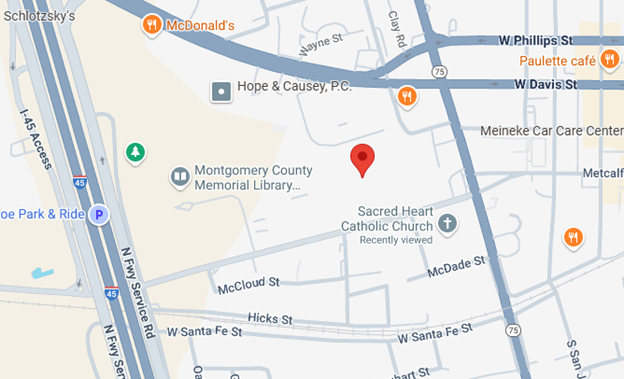
Our parish offers OCIA classes on Tuesdays from 6:30 – 8:00 at the Sacred Heart Church Parish Life Center at 704 Old Montgomery Rd. Conroe, TX 77301. The sessions run from early January to late May, and again from August to November. You are welcome to enter the classes at any time during the year.
Map to the Parish Life Center where the OCIA classes are held
Sacred Heart Church Parish Life Center – 704 Old Montgomery Rd. Conroe, TX 77301
(936) 756-8186 parishoffice@shconroe.org

Attend Mass
This is a link to a YouTube video where Father Mike describes the elements of the Mass Link
This link takes you to a video showing how to receive communion. Link
Our Parish Mass schedule can be found at the parish website – shconroe.org
What to Expect When Attending Mass as a Non-Catholic
Link to an online handbook with the order of the Mass that you can follow along with to help learn the Mass, common Catholic prayers, and other information
At Mass, Catholics do things and say things which are likely to seem rather alien. The Mass is based on 2,000 years of Christian theology and practice, and this itself rests on the even older foundation of Judaism.
Things at the Mass are sometimes initially hard to understand because it is so rich and it has so many layers of meaning. For example, consider incense… Incense is used at Mass for a host of reasons. It is symbolic of our prayers rising to God, but it also harkens back to the incense which was offered in the Jerusalem Temple in Ancient Israel.
If you keep coming back each week and start digging into the roots of the Mass, it’ll all start to make sense, and you’ll come to discover the profound richness which can be found there.
When you visit, you’ll soon notice that there’s a “script” for Mass. The priest and the people have prescribed parts. The priest will say something (e.g. “The Lord be with you!”) and then all the people will respond in unison (e.g. “And with your spirit”). These exchanges and prayers have been prayed by the Church for over 2,000 years and are worthy of a lifetime of meditation. Everything will probably be entirely in English, but there may be a few small parts sung in Latin or Greek.
Not only is there a “script”, there are “stage directions” too! God made us body and soul. Therefore, at Mass we don’t just think pious thoughts, we also worship with our bodies. This means that we stand to hear the words of Christ proclaimed, we sit to listen to the priest’s homily and we kneel in prayer at Communion.
A common concern in anticipation of many people’s first Mass is that they’re afraid they’ll “do something wrong” or stand out in some way. Don’t worry! All you have to do is copy those around you. I suggest finding a pew halfway down the church and then just sit when everyone else sits and stands when they stand.
The only point in the Mass where you’ll have to do anything is when the Priest or Deacon invites you to turn to the person next to you “and offer one another a sign of peace”. Typically, this just involves shaking your neighbor’s hand or offering a small wave or a nod and a smile. Often people say, “peace be with you” or just “peace”.
The Mass is divided into two parts: the Liturgy of the Word and the Liturgy of the Eucharist. The former part is devoted to prayer, the reading of Sacred Scripture and the priest’s homily, which is his reflection on the Bible passages which have just been read. The latter part of the Mass focuses on Holy Communion, or as it’s more commonly called, The Eucharist. If you’ve been to a Protestant service, the first part of the Mass will probably seem reasonably familiar, but the second half maybe less so.
Unless you understand the Catholic belief about the Eucharist, much of the Mass will seem incomprehensible…
So, what is the Eucharist? Well, in the part of the Mass known as “The Offertory Procession”, bread and wine (mixed with water) are brought forward and placed on the altar. Catholics believe that, by the authority of Christ, when the priest calls down the Holy Spirit upon the bread and wine, while the appearance of bread and wine remain, they are transformed into Jesus’ Body and Blood. By consuming them, we are filled with the Divine Life.
Understanding the Eucharist illuminates so much of what might be confusing about the Mass. This is why Catholics take the Mass so seriously. This is why we fast from food beforehand. This is why we dress nicely. This is why Catholics kneel at Communion and why we bow towards the tabernacle behind the altar, the shiny box which contains the Eucharist.
Since Catholics believe that Jesus is truly present in the bread and wine, we take the receiving of Holy Communion very seriously. As a result, Communion is restricted to practicing Catholics.
You can participate in the Holy Mass as a non-Catholic:
- Make the sign of the cross with holy water when you enter the church. Making the sign of the cross with the holy water is a remembrance of your baptism.
- Genuflect or bow toward the altar as you enter the pew.
- Do everything at Mass, including kneeling, responding and singing except take communion/accept the Eucharist.
- Instead, you can remain in the pew, or go up in line with everyone else but simply cross your arms over your chest and the priest will give you a blessing instead of bread and wine (many people do this, including children too young to receive communion so you will be among many).
- Pray, including the Rosary and the Liturgy of the Hours.
- You can look up the Bible readings of the day online to follow along.
- Ther are also online postings of the order of the mass where you to read about the various parts of the Catholic Mass.
Catholicism can seem closed to outsiders because there is so much ritual involved, but the truth is that the Church is open and inviting to anyone who truly wants to participate.
“When you do not receive communion…you can make a spiritual communion, which is a most beneficial practice; by it the loveLove To put the needs of another before our own. To will the good of the other. of God will be greatly impressed on you” – St. Theresa of Avila
My Jesus, I believe that You are present in the Most Holy Sacrament. I love You above all things, and I desire to receive You into my soul. Since I cannot at this moment receive You sacramentally, come at least spiritually into my heart. I embrace You as if You were already there and unite myself wholly to You. Never permit me to be separated from You. Amen.
“When we feel the love of God growing cold, let us instantly make a Spiritual Communion. When we cannot go to the church, let us turn towards the tabernacle; no wall can shut us out from the good God.” – St. John Marie Vianney
Develop your prayer practice
Developing a Catholic prayer practice involves consistency over duration; start with 5–10 minutes daily, gradually increasing. Anchor prayer to routines (e.g., morning offering, before meals, or nightly examination of conscience). Utilize tools like a Hallow app, a journal, a Bible for Lectio Divina, and create a sacred, quiet space.
Sacramentals—blessed objects, actions, or prayers like holy water, crucifixes, and the Sign of the Cross—are used in prayer to focus attention, evoke God’s presence, and increase devotion. Consider buying a rosary, crucifix, and prayer cards and asking a priest to bless them after Mass. Bishop Robert Barron has a short book “An Introduction to Prayer” (buy here on Amazon).
Strategies for developing a prayer practice
- Start Small and Be Consistent: Focus on building the habit rather than the length of time. Praying for 20 minutes daily (divided into 10-minute segments) can help build a habit.
- Structure Your Prayer: Use the PALE method: Praise, Ask, Listen, and Examine.
- Incorporate Traditional Catholic Prayers: Utilize the Rosary, Morning Offering, and visits to the Blessed Sacrament.
- Be Flexible and Patient: If you miss a day, do not get discouraged; pick up again the next day.
- Use Resources: Consider using apps like Hallow or Laudate for guided meditations.
- Create a Sacred Space: Set up a dedicated area in your home with a crucifix, bible,
Daily Prayer Ideas:
Rosary: Pray a decade or the full Rosary.
Morning Offering: Offer your day, work, and struggles to God.
Exam of Conscience: Review your day and reflect on where you felt closest to God.
Lectio Divina: Read and reflect on Scripture. Consider buying a Catholic study Bible.
You can search for common Catholic prayers online.
Learn the foundational beliefs of the Catholic Church, The Creed, and common prayers
The Foundational Beliefs of the Catholic Church, The Creed, and Common Prayers
Father Nicolas asks us all to memorize the creed and some of the common prayers. Memorization is a good way to enhance your personal prayer practice.
The Nicene Creed
I believe in one God,
the Father almighty,
maker of heaven and earth,
of all things visible and invisible.
I believe in one Lord Jesus Christ,
the Only Begotten Son of God,
born of the Father before all ages.
God from God, Light from Light,
true God from true God,
begotten, not made, consubstantial with the Father;
through him all things were made.
For us men and for our salvation
he came down from heaven,
and by the Holy Spirit was incarnate of the Virgin Mary,
and became man.
For our sake he was crucified under Pontius Pilate,
he suffered death and was buried,
and rose again on the third day
in accordance with the Scriptures.
He ascended into heaven
and is seated at the right hand of the Father.
He will come again in glory
to judge the living and the dead
and his kingdom will have no end.
I believe in the Holy Spirit, the Lord, the giver of life,
who proceeds from the Father and the Son,
who with the Father and the Son is adored and glorified,
who has spoken through the prophets.
I believe in one, holy, catholic and apostolic Church.
I confess one Baptism for the forgiveness of sins
and I look forward to the resurrection of the dead
and the life of the world to come. Amen.
The “Our Father” Prayer
The Our Father (or Lord’s Prayer) is a foundational Christian prayer taught by Jesus to his disciples, appearing in Matthew 6:9–13 and Luke 11:2–4. It praises God, asks for daily sustenance, requests forgiveness, and seeks protection from evil. It is widely considered a summary of the entire Gospel.
“Our Father, who art in heaven,
hallowed be thy name;
thy kingdom come;
thy will be done on earth as it is in heaven.
Give us this day our daily bread;
and forgive us our trespasses as we forgive those who trespass against us;
and lead us not into temptation,
but deliver us from evil.
Amen.”
The Hail Mary Prayer
The Hail Mary is a central Catholic prayer honoring the Virgin Mary, rooted in Scripture (Luke 1) and invoking her intercession. It consists of two parts: a greeting based on the Annunciation and Visitation, and a petition asking for her prayers “now and at the hour of our death”.
“Hail, Mary, full of grace, the Lord is with thee. Blessed art thou among women, and blessed is the fruit of thy womb, Jesus. Holy Mary, Mother of God, pray for us sinners, now and at the hour of our death. Amen.”
The Glory Be prayer
(or Gloria Patri) is a foundational Christian doxology, or prayer of praise, honoring the Holy Trinity: Father, Son, and Holy Spirit. It is frequently recited in the Rosary and other devotions to give glory to God, emphasizing His eternal nature.
“Glory be to the Father, and to the Son, and to the Holy Spirit,
As it was in the beginning, is now, and ever shall be,
World without end.
Amen.”
Father Nicolas wants all members of the parish, and those who are coming into the church, to learn the essential doctrines of the faith, which are summarized in the Nicene or Apostlesapostles In Christian theology, the apostles were Jesus’ closest followers and primary disciples, and were responsible for spreading his teachings.’ Creed. Beyond the intellectual assent to these beliefs, the Church mandates five “precepts” that constitute the minimum required practices for a faithful Catholic.
A Catholic must believe in:
- The Trinity: One God in three persons (Father, Son, and Holy Spirit).
- The Incarnation: Jesus Christ is the Son of God who took on human nature, died, and rose again.
- The Church: The authority of the Roman Catholic Church, as founded by Christ.
- The Sacraments: Belief in the seven sacraments, specifically the Real Presence of Christ in the Eucharist.
- Repentance and Forgiveness: The need for confession of sins.
The Five Precepts of the Church (Minimum Actions)
These are the obligatory, “bare minimum” actions required to remain a practicing Catholic:
- Sunday Mass: Attend Mass on Sundays and Holy Days of Obligation, and rest from servile labor.
- Confession: Confess serious sins at least once a year (Sacrament of Reconciliation).
- Eucharist: Receive Holy Communion at least once a year, during the Easter season.
- Fasting/Abstinence: Observe the days of fasting and abstinence (e.g., Ash Wednesday and Good Friday).
- Support the Church: Provide for the material needs of the Church according to one’s ability.
The Seven Gifts of the Holy Spirit
In Catholic teaching, the seven Gifts of the Holy Spirit—wisdom, understanding, counsel, fortitude, knowledge, piety, and fear of the Lord—are permanent dispositions that make individuals docile to the Holy Spirit’s promptings. Rooted in Isaiah 11:1-3, these gifts perfect the virtues of those who receive them, helping them to live a holy life and follow divine inspiration.
- Wisdom: Enables a person to see, evaluate, and order all things according to God’s perspective and divine plan.
- Understanding: Provides a deeper, intuitive insight into the truths of faith and the mysteries of God.
- Counsel (Right Judgment): Helps to discern between right and wrong, allowing individuals to make sound moral decisions in accordance with God’s will.
- Fortitude (Courage): Gives supernatural strength and courage to persevere in faith, overcome fear, and endure trials.
- Knowledge: Enables a person to perceive the true value of created things in relation to God.
- Piety (Reverence): Deepens the filial love and respect for God as a loving Father, inspiring true worship and affection.
- Fear of the Lord (Wonder and Awe): Creates a profound respect for God’s majesty and a desire to avoid offending Him out of love, not servile fear.
Key Aspects of the Gifts
- Purpose: The gifts are designed to make the faithful receptive to the promptings of the Holy Spirit, enabling them to live a full Christian life.
- Relationship to Virtues: According to St. Thomas Aquinas, these gifts perfect the theological and moral virtues.
- Origin: They are based on the prophecy in Isaiah 11 regarding the qualities that would rest upon the Messiah.
These gifts are considered distinct from the charisms (special graces for service) and the fruits of the Holy Spirit (virtues resulting from the Holy Spirit’s action).
The Seven Sacraments
Sacraments of Initiation: These sacraments lay the foundations of Christian life.
- Baptism: Cleanses from sin and initiates one into the Church.
- Confirmation: Seals the baptized with the gift of the Holy Spirit, strengthening them.
- Eucharist: The source and summit of Christian life, representing the body and blood of Christ.
Sacraments of Healing: These sacraments continue Jesus’ work of healing and salvation.
- Penance and Reconciliation: Confession of sins to a priest for absolution.
- Anointing of the Sick: Offers spiritual and physical strength to those struggling with illness.
Sacraments at the Service of Communion
These sacraments are directed toward the salvation of others.
- Holy Orders: The ordination of bishops, priests, and deacons.
- Matrimony (Marriage): The covenantal union between a man and a woman.
Core Moral Obligations
Catholics are also required to follow the Ten Commandments and the moral teachings of the Church, which include the prohibition of mortal sins.
Note: While these are the minimums, the Church encourages a life of active faith that goes beyond these requirements.
The Ten Commandments
Do Not Covet: Do not covet your neighbor’s goods or wife.
I am the Lord your God: You shall have no other gods before me.
No Idols: Do not make or worship idols.
Reverence God’s Name: Do not take the name of the Lord in vain.
Keep the Sabbath Holy: Remember the Sabbath day.
Honor Parents: Honor your father and mother.
Do Not Murder: You shall not kill.
No Adultery: Do not commit adultery.
Do Not Steal: You shall not steal.
No False Witness: Do not bear false witness against your neighbor.
Supplement OCIA class with additional study
Suggested study plan:
Begin listening to the All Roads Lead to Rome podcast by Dr. M.S. Bickford. Here you can learn about the teachings and practices of the Catholic Church.
Read the book To Whom Shall I Go? by Ellie Hiller. This is her conversion story and a good place to learn about the differences between Catholic and Non-Catholic Christian doctrine.
Learn about the Catholic Mass: This link takes you to a 10 session video series explaining the Catholic Mass. It will help you learn about how and why we celebrate the “source and summit” of our Christian faith. “A Biblical Walk Through the Mass” is a short book explaining the Mass.
Develop your prayer practice. The short book An Introduction to Prayer by Bishop Robert Barron is a good resource to help you learn how to pray.
Study sacred scripture. Two good study Bibles are: The Augustine Institute ESV Study Bible and The Ignatius Catholic Study Bible.
Sign up for the “Formed.org” website where you will find a wealth of free Catholic content including the Symbolon videos that we use in OCIA class. You can sign up as a member of our parish by following the instructions below. There are online courses about Catholicism, The Saints, daily reflections, scripture study, free audio books, resources and videos for kids, and much more. To sign up as a Sacred Heart Parishioner go to: https://signup.formed.org Then type in Sacred Heart Conroe, select our parish, and enter your contact information to establish your free account. Formed is also available as a smartphone app.
Websites:
Online handbook with information about the Mass, common Catholic prayers, and more
catholic.com – Answers to questions about Catholicism
United States Conference of Catholic Bishops Website.org – includes an online Catechism
newadvent.org – Writings of the Church Fathers and much more
YouTube Channels and Podcasts:
Bishop Robert Barron – (Be sure to watch or listen to Bishop’s Sunday homilies)
Father Mike Schmitz “The Catechism in a Year” – 365 podcasts that teach the beliefs of the Catholic Church
Father Mike Schmitz “The Bible in a Year” – 365 podcasts that teach about the Holy Scriptures
Books:
Ignatius Catholic Study Bible (2024)
“The Four Witnesses” by Rod Bennett (Introduction to the writings of the early church fathers)
“The Compendium of the Catechism of the Catholic Church”. This 200-page volume offers a quick synopsis of the essential contents of the faith as promulgated in the Catechism of the Catholic Church
Phone Apps:
Hallow – The number one app for Catholic Christian prayer and meditation. It includes Bible and Catechism in a year, an online OCIA class series in the form of 10-20 minute podcasts, and much more.
Ignatius Study Bible – online Bible
Laudate – Daily readings, order of the Mass, prayers
Magesterium – An AI driven search engine that you can use to answer questions about Catholicism. It is like ChatGPT but restricts its searches to Catholic sources.
Select a sponsor and a patron saint
Once you have completed ihe initial interview with a member ofour OCIA team you will be registered for OCIA classes. We will need a copy of your birth certificate and baptism certificate (if you are a candidate). You can bring a copy to class or email an image of the certificates and documents to anunez@shconroe.org. If you are unable to get a copy of your baptism certificate we can accept an affidavit of witness to your baptism filled out by someone who can attest to your baptism.
This article will be helpful in understanding the church’s teaching on patron saints. This Article is about selecting a confirmation sponsor.
Identify your OCIA category and determine if you have any impediments to entering the Church.
In OCIA, catechumens are unbaptized individuals preparing to receive all three sacraments of initiation (Baptism, Confirmation, Eucharist) and candidates are already baptized Christians (in another tradition or Catholic) seeking full communion through Confirmation and Holy Communion. It is important for you to know your category because at our parish everyone attends OCIA class together and there are different rites and rituals for each group. Knowing your category will reduce confusion when we discuss shedules and events throughout the year.
Catechumens come into the Church at Easter vigil (the Saturday evening before Easter) every year. They spend at least a full year in the OCIA program and have more rituals and activities than candidates.
In our parish, candidates usually come into the Church at Pentecost (50 days after Easter) and at the Feast day of Christ the King (the week before the start of Advent in late November).
One of the requirements to become Catholic is to resolve any marital or living arrangements that do not conform to the Church’s teaching on marriage. These situations must be resolved before a person can receive the sacraments of initiation. Typically, these impediments involve previous divorces, a mixed marriage of a Catholic and non-Catholic, or unmarried people living together.
Please use this checklist to identify your situation:
These situations do not require marriage prep, and you have no impediments:
- Unmarried and not cohabitating
- Two married non-Catholics who are both in their first marriage.
- A Catholic and a non-Catholic who were married by a Priest or Deacon in a Catholic Church.
These situations require working with our marriage coordinator to resolve prior to receiving your sacraments:
- Unmarried and cohabitating.
- A Catholic and a non-Catholic who were not married in the Catholic Church.
- A Catholic and a non-Catholic who are married and either spouse was previously divorced.
- Two married non-Catholics who either or both were previously divorced.
If your situation is described in the second section above please make an appointment with our Marriage Preparation coordinator, Toni Castro (acastro@shconroe.org), using the following link- Make An Appointment – Toni will answer your questions and help begin your preparations.
“Annulment: The Process and its Meaning” by Rev. Patrick Lagges
Join the parish community for fellowship, service, and learning opportunities
We invite you to join in the life of the parish. There is no need to wait for your confirmation into the church to participate in the various ministries and activites. There are many non confirmed OCIA students who are working in service and fellowship ministries.
Please go to the parish website at shconroe.org and select the tabs at the top of the page labeled “Get Involved” and “Faith Formation” for descriptions and contact information for the various service and learning oportunities. You can also ask any of the OCIA catechists to direct you.
Liturgical Rites for Catechumens
Liturgical rites for OCIA catechumens are, structured, public celebrations marking key steps in conversion toward full initiation.
Key liturgical rites for catechumens include:
Rite of Acceptance into the Order of Catechumens: The first major rite, usually held in the Fall, where seekers publicly express their desire to follow Christ and are signed with the cross.
Celebrations of the Word and Dismissal: During the Catechumenate period, catechumens participate in the Liturgy of the Word at Mass but are dismissed after the homily to reflect further on the Scriptures.
Rite of Sending (Optional): A parish-level rite, often before the start of Lent, where the community sends catechumens to the bishop for election.
Rite of Election or Enrollment of Names: Usually held on the First Sunday of Lent, the bishop (or delegate) formally accepts the catechumens’ desire to enter the sacraments, making them “the Elect”.
Scrutinies: Celebrated on the 3rd, 4th, and 5th Sundays of Lent, these are powerful prayers of intercession and spiritual healing for the Elect.
Presentations of the Creed and Lord’s Prayer: Rites during Lent where the Elect receive the core symbols of the faith.
Sacraments of Initiation: The culmination at the Easter Vigil, where the Elect receive Baptism, Confirmation, and Holy Eucharist
These rituals, often involving sponsors, are designed to support catechumens in their spiritual journey toward full participation in the Catholic Church. The parish will not contact your sponsor, so be sure to let them know when they will be joining you for these rites and share any instruction documents.
Liturgical Rites for Candidates
OCIA candidates—baptized individuals seeking full communion with the Catholic Church—participate in specific liturgical rites marking their journey, including the Rite of Welcoming, Calling the Candidates to Continuing Conversion, and Final Reception when they are confirmed into the Church. These rites recognize their baptism and focus on their preparation for Confirmation and Eucharist. The Rites of Welcoming and Calling are optional and may not be held depending on when you are receiving your confirmation.
At Sacred Heart we welcome candidates into the church at various times of the year, so we will tell you in advance the schedule of events and which of these rites you and your sponsor will be participating in. The parish will not be contacting your sponsor, so please remember to stay in touch with them about your schedule and share instruction documents with them.
Key Rites for OCIA Candidates
- Rite of Welcoming /Acceptance: The first public step where inquirers declare their intent to follow Christ and are welcomed by the church community, often including the signing of the senses with the cross.
- Rite of Calling the Candidates to Continuing Conversion: Often celebrated on the First Sunday of Lent, this aligns with the Bishop’s recognition of candidates, affirming their desire for repentance and growth.
- Penitential Rite: A rite focused on reflection and repentance, specifically for candidates, usually occurring during Lent.
- The Sacraments of Initiation.
These rituals, often involving sponsors, are designed to support candidates in their spiritual journey toward full participation in the Catholic Church.
OCIA team contact information and links to Sacred Heart parish resources
Alfonso Nunez, OCIA Coordinator – anunez@shconroe.org
Henry Avila, Catechist – hjavila@icloud.com
Daniel Shroyer, Catechist – daniel.r.shroyer@gmail.com
Danny Fike, Catechist – danny.fike@gmail.com
Heather Fike, Catechist – heather.fike@gmail.com
Previous Year’s OCIA Classes – Video, Audio, and Notes
2024-2025 Class Notes
A Short History of the Catholic Church
Fall of 2025 Class Lecture Videos
The Sacrament of the Eucharist – Part 1
The Sacrament of the Eucharist – Part 2
The Sacrament of Penance and Reconciliation
The Sacraments of Holy Orders and Anointing of the Sick
Winter and Spring of 2026 Class Calendar and Links to Class Lecture Audio and Notes (If Available)
What Does Enlightenment Mean?