From Wikipedia, the free encyclopedia


In religion, a relic is an object or article of religious significance from the past.[1] It usually consists of the physical remains or personal effects of a saint or other person preserved for the purpose of veneration as a tangible memorial. Relics are an important aspect of some forms of Buddhism, Christianity, Islam, shamanism, and many other religions. Relic derives from the Latin reliquiae, meaning “remains”, and a form of the Latin verb relinquere, to “leave behind, or abandon”. A reliquary is a shrine that houses one or more religious relics.

History
One of the earliest sources that purports to show the efficacy of relics is found in 2 Kings 13:20–21:
And Elisha died, and they buried him. Now the bands of the Moabites used to invade the land at the coming in of the year. And it came to pass, as they were burying a man, that, behold, they spied a band; and they cast the man into the sepulchre of Elisha; and as soon as the man touched the bones of Elisha, he revived, and stood up on his feet. [13]
Also cited is the veneration of relics from the martyr and bishop Saint Polycarp of Smyrna recorded in the Martyrdom of Polycarp, written sometime from 150 to 160 AD.[14] With regard to relics that are objects, an often cited passage is Acts 19:11–12, which says that Paul the Apostle‘s handkerchiefs were imbued by God with healing power. In the gospel accounts of Jesus healing the bleeding woman and again in the Gospel of Mark 6:56, those who touched Jesus’ garment were healed.
The practice of venerating relics seems to have been taken for granted by writers like Augustine, St. Ambrose, Gregory of Nyssa, St. Chrysostom, and St. Gregory Nazianzen. Dom Bernardo Cignitti, O.S.B., wrote, “[T]he remains of certain dead are surrounded with special care and veneration. This is because the mortal remains of the deceased are associated in some manner with the holiness of their souls which await reunion with their bodies in the resurrection.”[15] Thomas Aquinas (d. 1274) pointed out that it was natural that people should treasure what is associated with the dead, much like the personal effects of a relative.[16] In an interview with Catholic News Service, Fr. Mario Conte, executive editor of the Messenger of St. Anthony magazine in Padua, Italy, said, “Saints’ relics help people overcome the abstract and make a connection with the holy … Saints do not perform miracles. Only God performs miracles, but saints are intercessors.”[17]

In the early Church the disturbance of the remains of martyrs and other saints was not practiced. They were allowed to remain in their often unidentified resting places such as in cemeteries and the catacombs of Rome. These places were always outside the walls of the city, but martyriums began to be built over the site of the burial. Since it was considered beneficial to the soul to be buried close to the remains of saints, several large “funerary halls” were built over the sites of martyr’s graves, including Old Saint Peter’s Basilica. These were initially not regular churches, but “covered cemeteries” crammed with graves, wherein was celebrated funerary and memorial services. It may have been thought that when the souls of the martyrs went to heaven on resurrection day they would be accompanied by those interred nearby, who would thus gain favour with God.[18]
Some early Christians attributed healing powers to the pulvis (dust) from graves of saints, including Gregory of Tours. The cult of Martin of Tours was very popular in Merovingian Gaul, and centered at a great church built just outside the walls of Tours. When Saint Martin died on November 8, 397, at a village halfway between Tours and Poitiers, the inhabitants of these cities were ready to fight for his body, which the people of Tours managed to secure by stealth. Tours became the chief point of Christian pilgrimage in Gaul, a place for the healing of the sick.[19]
Gregory of Tours travelled to the shrine when he had contracted a serious illness. Later, as bishop of Tours, Gregory wrote extensively about miracles attributed to the intercession of St Martin.[20] Nestorian Christianity utilized the hanānā–a mixture made with the dust of Thomas the Apostle‘s tomb–for healing. Within the Assyrian Church of the East, it is consumed by a couple getting married in the Mystery of Crowning.[21][22]
The Second Council of Nicaea in 787 drew on the teaching of St. John Damascene[23] that homage or respect is not really paid to an inanimate object, but to the holy person, the veneration of a holy person is itself honour paid to God.[16] The Council decreed that every altar should contain a relic, making it clear that this was already the norm, as it remains to the present day in Catholic and Orthodox churches. The veneration of the relics of the saints reflects a belief that the saints in heaven intercede for those on earth. A number of cures and miracles have been attributed to relics, not because of their own power, but because of the holiness of the saint they represent.[24]
Many tales of miracles and other marvels were attributed to relics beginning in the early centuries of the church. These became popular during the Middle Ages. They were collected in books of hagiography such as the Golden Legend or the works of Caesarius of Heisterbach. These miracle tales made relics much sought-after during the period. By the Late Middle Ages, the collecting of, and dealing in, relics had reached enormous proportions, and had spread from the church to royalty, and then to the nobility and merchant classes.
The Council of Trent of 1563 enjoined bishops to instruct their flocks that “the holy bodies of holy martyrs … are to be venerated by the faithful, for through these [bodies] many benefits are bestowed by God on men”. The Council further insisted that “in the invocation of saints, the veneration of relics and the sacred use of images, every superstition shall be removed and all filthy lucre abolished.”[18] There are also many relics associated with Jesus.

In his introduction to Gregory’s History of the Franks, Ernest Brehaut analyzed the Romano-Christian concepts that gave relics such a powerful draw. He distinguished Gregory’s constant usage of sanctus and virtus, the first with its familiar meaning of “sacred” or “holy”, and the second as “the mystic potency emanating from the person or thing that is sacred … In a practical way the second word [virtus] … describes the uncanny, mysterious power emanating from the supernatural and affecting the natural … These points of contact and yielding are the miracles we continually hear of”.[19]
Relics and pilgrimage
Rome became a major destination for Christian pilgrims as it was easier to access for European pilgrims than the Holy Land. Constantine the Great erected great basilicas over the tombs of Saints Peter and Paul. A distinction of these sites was the presence of holy relics. Over the course of the Middle Ages, other religious structures acquired relics and became destinations for pilgrimage. In the eleventh and twelfth centuries, substantial numbers of pilgrims flocked to Santiago de Compostela in Spain, in which the supposed relics of the apostle James, son of Zebedee, discovered c. 830, are housed.[25] Santiago de Compostela remains a significant pilgrimage site, with around 200,000 pilgrims, both secular and Christian, completing the numerous pilgrimage routes to the cathedral in 2012 alone.[26][27]
By venerating relics through visitation, gifts, and providing services, medieval Christians believed that they would acquire the protection and intercession of the sanctified dead.[14] Relics of local saints drew visitors to sites like Saint Frideswide’s in Oxford, and San Nicola Peregrino in Trani.[25]
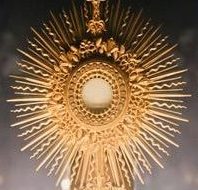
Instead of having to travel to be near to a venerated saint, relics of the saint could be venerated locally. Relics are often kept on a circular decorated theca, made of gold, silver, or other metal.[citation needed]
Believers would make pilgrimages to places believed to have been sanctified by the physical presence of Christ or prominent saints, such as the site of the Holy Sepulchre in Jerusalem.[citation needed]
Economic effect
As holy relics attracted pilgrims and these religious tourists needed to be housed, fed, and provided with souvenirs, relics became a source of income not only for the destinations that held them, but for the abbeys, churches, and towns en route. Relics were prized as they were portable.[28] They could be possessed, inventoried, bequeathed, stolen, counterfeited, and smuggled.[29] They could add value to an established site or confer significance on a new location.[30] Offerings made at a site of pilgrimage were an important source of revenue for the community who received them on behalf of the saint.[31]
According to Patrick Geary, “[t]o the communities fortunate enough to have a saint’s remains in its church, the benefits in terms of revenue and status were enormous, and competition to acquire relics and to promote the local saint’s virtues over those of neighboring communities was keen”.[32] Local clergy promoted their own patron saints in an effort to secure their own market share. On occasion guards had to watch over mortally ill holy men and women to prevent the unauthorized dismemberment of their corpses as soon as they died.[23] Geary also suggests that the danger of someone murdering an aging holy man in order to acquire his relics was a legitimate concern.[32]
Relics were used to cure the sick, to seek intercession for relief from famine or plague, to take solemn oaths, and to pressure warring factions to make peace in the presence of the sacred. Courts held relics since Merovingian times.[30] St Angilbert acquired for Charlemagne one of the most impressive collections in Christendom.[28] An active market developed. Relics entered into commerce along the same trade routes followed by other portable commodities. Matthew Brown likens a ninth-century Italian deacon named Deusdona, with access to the Roman catacombs, as crossing the Alps to visit monastic fairs of northern Europe much like a contemporary art dealer.[33]
Canterbury was a popular destination for English pilgrims, who traveled to witness the miracle-working relics of St Thomas Becket, the sainted Archbishop of Canterbury who was assassinated by knights of King Henry II in 1170.[25] After Becket’s death, his successor and the Canterbury chapter quickly used his relics to promote the cult of the as-yet-uncanonized martyr. The motivations included the assertion of the Church’s independence against rulers, a desire to have an English (indeed Norman English) saint of European reputation, and the desire to promote Canterbury as a destination for pilgrimage. In the first years after Becket’s death, donations at the shrine accounted for twenty-eight percent of the cathedral’s total revenues.[34]
Counterfeits
In the absence of real ways of assessing authenticity, relic-collectors became prey to the unscrupulous, and some extremely high prices were paid. Forgeries proliferated from the very beginning. Augustine already denounced impostors who wandered around disguised as monks, making a profit from the sale of spurious relics.[35] In his Admonitio Generalis of 789, Charlemagne ordered that “the false names of martyrs and the uncertain memorials of saints should not be venerated”.[14] The Fourth Lateran Council (1215) of the Catholic Church condemned abuses such as counterfeit relics and exaggerated claims.[16]
Pieces of the True Cross were one of the most highly sought-after of such relics; many churches claimed to possess a piece of it, so many that John Calvin famously remarked that there were enough pieces of the True Cross to build a ship from.[36] A study in 1870[37] found that, put together, the claimed relics of the cross at that much later time weighed less than 1.7 kg. By the middle of the 16th century, the number of relics in Christian churches became enormous, and there was practically no possibility to distinguish the authentic from the falsification, since both of them had been in the temples for centuries and were objects for worship. In 1543, John Calvin wrote about fake relics in his Treatise on Relics, in which he described the state of affairs with relics in Catholic churches. Calvin says that the saints have two or three or more bodies with arms and legs, and even a few extra limbs and heads.[38][39]
Due to the existence of counterfeit relics, the Church began to regulate the use of relics. Canon Law required the authentication of relics if they were to be publicly venerated. They had to be sealed in a reliquary and accompanied by a certificate of authentication, signed and sealed by someone in the Congregation for Saints,[40] or by the local Bishop where the saint lived. Without such authentication, relics are not to be used for public veneration.[41] The Congregation for Saints, as part of the Roman Curia, holds the authority to verify relics in which documentation is lost or missing. The documents and reliquaries of authenticated relics are usually affixed with a wax seal.[40]
Classifications and prohibitions in the Catholic Church


In Catholic theology, sacred relics must not be worshipped, because only God is worshipped and adored. Instead, the veneration given to them was “dulia“. Saint Jerome declared, “We do not worship, we do not adore, for fear that we should bow down to the creature rather than to the Creator, but we venerate the relics of the martyrs in order the better to adore Him whose martyrs they are.”[42]
Until 2017, the Catholic Church divided relics into three classes:
- First-class relics: items directly associated with the events of Christ’s life (manger, cross, etc.) or the physical remains of a saint (a bone, a hair, skull,[43] a limb, etc.). Traditionally, a martyr’s relics are often more prized than the relics of other saints. Parts of the saint that were significant to that saint’s life are more prized relics. For instance, King St. Stephen of Hungary‘s right forearm is especially important because of his status as a ruler. A famous theologian’s head may be his most important relic; the head of St. Thomas Aquinas was removed by the monks at the Cistercian abbey at Fossanova where he died. If a saint travelled often, then the bones of his feet may be prized. Catholic teaching prohibits relics to be divided up into small, unrecognizable parts if they are to be used in liturgy (i.e., as in an altar; see the rubrics listed in Rite of Dedication of a Church and an Altar).
- Second-class relics: items that the saint owned or frequently used, for example, a crucifix, rosary, book, etc. Again, an item more important in the saint’s life is thus a more important relic. Sometimes a second-class relic is a part of an item that the saint wore (a shirt, a glove, etc.) and is known as ex indumentis (“from the clothing”).
- Third-class relics: any object that has been in contact with a first- or second-class relic.[44] Most third-class relics are small pieces of cloth, though in the first millennium oil was popular; the Monza ampullae contained oil collected from lamps burning before the major sites of Christ’s life, and some reliquaries had holes for oil to be poured in and out again. Many people call the cloth touched to the bones of saints “ex brandea“. But ex brandea strictly refers to pieces of clothing that were touched to the body or tombs of the apostlesapostles In Christian theology, the apostles were Jesus’ closest followers and primary disciples, and were responsible for spreading his teachings.. It is a term that is used only for such; it is not a synonym for a third-class relic.
In 2017, the Congregation for the Causes of Saints abolished the relics of the third degree, introducing a two-stage scale of classification of relics: significant (insigni) and non-significant (non insigni) relics. The first are the bodies or their significant parts, as well as the entire contents of the urn with the ashes preserved after cremation. The second includes small fragments of the bodies, as well as objects used by saints and blesseds.[45]
The sale or disposal by other means of “sacred relics” (meaning first and second class) without the permission of the Apostolic See is now strictly forbidden by canon 1190 of the 1983 Code of Canon Law.[46] However, the Catholic Church permitted the sale of third-class relics.[47] Relics may not be placed upon the altar for public veneration, as that is reserved for the display of the Blessed Sacrament (host or prosphora and Eucharistic wine after consecration in the sacrament of the Eucharist).[48]
- St. Peter’s chains, preserved in San Pietro in Vincoli, Rome, a second-class relic
- Main Altar of St. Raphael’s Cathedral, Dubuque, Iowa, containing the remains of Saint Cessianus, a boy martyred during the Diocletianic Persecution
- Relics of St. Demetrius in the cathedral of Thessalonika, Greece
- Relic of the True Cross, Decani Monastery, Serbia
- Relic of Pope St. John Paul II, declared a saint in 2014, in the Hong Kong Catholic Cathedral of the Immaculate Conception


In art
Many churches were built along pilgrimage routes. A number in Europe were either founded or rebuilt specifically to enshrine relics, (such as San Marco in Venice) and to welcome and awe the large crowds of pilgrims who came to seek their help. Romanesque buildings developed passageways behind the altar to allow for the creation of several smaller chapels designed to house relics. From the exterior, this collection of small rooms is seen as a cluster of delicate, curved roofs at one end of the church, a distinctive feature of many Romanesque churches. Gothic churches featured lofty, recessed porches which provided space for statuary and the display of relics.
Historian and philosopher of art Hans Belting observed that in medieval painting, images explained the relic and served as a testament to its authenticity. In Likeness and Presence, Belting argued that the cult of relics helped to stimulate the rise of painting in medieval Europe.[23]
Reliquaries

Reliquaries are containers used to protect and display relics. While frequently taking the form of caskets, they have many other forms including simulations of the relic encased within (e.g., a gilded depiction of an arm for a relic consisting of arm bones). Since the relics themselves were considered valuable, they were enshrined in containers crafted of or covered with gold, silver, gems, and enamel.[54]
Ivory was widely used in the Middle Ages for reliquaries, its pure white color an indication of the holy status of its contents.[55] These objects constituted a major form of artistic production across Europe and Byzantium throughout the Middle Ages.
List of claimed relics


- Relics of the True Cross of Jesus are claimed by many churches around the world. The same applies to Holy Nails, Holy Sponges, Holy Lances, Holy Thorns and other Instruments of the Passion. Famous examples are the Holy Nail in the Iron Crown of Lombardy in Monza Cathedral, the Holy Lance that was part of the Crown Jewels of the Holy Roman Empire in the Hofburg Palace in Vienna, and the Holy Thorn Reliquary in the British Museum in London.
- The Seamless robe of Jesus is kept in a purpose-built chapel in Trier Cathedral.
- The Sandals of Jesus Christ were donated to Prüm Abbey, Germany, by popes Zachary and Stephen II in the 8th century.
- The Marienschrein in Aachen Cathedral contains four important relics: the nappy and loin cloth of Jesus, the dress of Mary and the decapitation cloth of John the Baptist. The Karlsschrein in the same church contains the remains of Charlemagne, who was locally venerated as a saint.
- The Girdle of Mary is kept in the Basilica of Our Lady in Maastricht, Netherlands.
- The Shrine of the Three Kings in Cologne Cathedral contains the remnants of the biblical Magi.
- St Peter’s Basilica in the Vatican contains Saint Peter’s relics.
- St Paul’s relics are allegedly contained in the Basilica of Saint Paul Outside the Wall, in Rome.[56]
- St James‘ relics are reputedly held at the Cathedral of Santiago de Compostela, Spain.
- St Luke the Evangelist’s body is held at the Abbey of Santa Giustina in Padua, Italy; his head, in the St. Vitus Cathedral in Prague; and a rib, at his tomb in Thebes, Greece.
- St Mark the Evangelist’s relics are held at St Mark’s Basilica in Venice.
- St Matthew the Evangelist’s relics are purported to be in the Cathedral of Salerno, Italy.
- St John the Evangelist’s tomb is purported to be in the Basilica of St. John at Ephesus in Turkey. The opening of his tomb during Constantine the Great‘s reign yielded no bones, giving rise to the belief that his body was assumed into heaven.[57]
- John the Baptist‘s skull, or parts of it, are venerated at the Amiens Cathedral in France, at the Church of San Silvestre in Capite in Rome and at the Munich Residenz Palace. His other relics were discovered in a Bulgarian monastery in 2010.[58]
- St Andrew’s relics are contained in the Basilica of St Andrew in Patras, Greece.
- Reliquary arms of Saint Thomas the Apostle can be found in churches around the globe. Most contain only a fragment of the arm that allegedly touched Christ’s side wound after the Resurrection.
- Saint Thomas Aquinas‘ relics are contained in the Church of the Jacobins, Toulouse, France.
- Saint Francis of Assisi‘s relics are enshrined in the Basilica of Saint Francis in Assisi, Italy.
- Saint Catherine of Siena‘s head is stored in San Domenico church, Siena, with her body in Santa Maria sopra Minerva Church in Rome.
- Saint George‘s arm is kept in Lod.[59]
- Saint Servatius‘ relics are largely kept in a gilded chest and bust in the Basilica of Saint Servatius in Maastricht, Netherlands. Some of his relics are in Tongeren, Belgium, and Quedlinburg, Germany.
- Saint Lambert‘s skull is contained in a reliquary bust in Liège Cathedral, Belgium.
- Saint Hubert‘s remains were enshrined in the Abbey of Saint-Hubert, Belgium.
- Saint Willibrord‘s remains are in Echternach, Luxemburg.
- Nun Maria Droste zu Vischering’s (known as Mary of the Divine Heart) relics are exposed in the Church of the Sacred Heart of Jesus in Ermesinde, Portugal.
- The shin of Pope Saint Clement I is kept in the Church of the Conception of Santa Cruz de Tenerife, Spain.[60]